A Nurse with a Gun

Saturday, March 25, 2006

Recognizing Threats

A couple of weeks ago I wrote a post on the realities of surviving a gunfight. Much of my writing focused on the need to avoid the conflict. Many believe that they can avoid conflict by avoiding particular areas. This is not always the case. A person must go about one's life, and the criminal element does the same. A person may be more likely to be attacked in certain areas, but they can be victimized virtually anywhere. Indeed, they are often less prepared in their own element. Conflict avoidance requires threat recognition.

To recognize threats, one has to understand how the criminal mind works. The criminal is a predator. He (or she) sees the world as having two types of people.....Other predators and prey. Many honest gun owners like to think of themselves as "sheepdogs" but to the criminal, the sheepdog is simply another brand of predator. Like other beasts, it is a matter of survival for the criminal to prey on those weaker than themselves. To select the wrong victim is to become prey. If you want to survive in the criminal's world, you must be seen as a superior predator. Once you understand the criminal's thought processes, most attacks can be avoided simply by removing oneself from the victim selection process. There are several steps to victimization.

Intent
This is when the criminal decides to commit a crime. He likely has not selected a victim yet. Internally, however, the criminal has made the decision that he must fill a need, whether it be money to pay off his grandma's medicine bill, or cash to buy a bit of crack. He has decided to go to work. He may work alone, or with others, but like anyone else who goes to work, the working criminal's body language and demeanor changes. The criminal must disguise his intent, however, lest he be snared by the ultimate predator, the police. Thus, the working criminal lies in wait, like a lion in the grass, waiting for suitable prey. He is observant, and he will toss out bait to potential prey to see if he gets a nibble. Often, a criminal team will place the least threatening member in view to test potential prey while the others on the team remain hidden. He is not a fisherman, however, he does not require a nibble. The criminal is a predator. Failure to nibble at the bait is also a sign of potential prey. Remember, the only way to be left alone by this predator, or team of predators, is to be seen as a superior predator.
A superior predator may not attack, but they will always recognize other predators. If the criminal is recognized by someone he sees as an equal or superior predator, he will stay in the shadows as long as he or his territory is not threatened. If the recognition comes from someone he sees as prey, however, he begins to work in earnest.

Selection
The criminal, once he has observed a potential victim, will send out some test runs to determine if the person is indeed prey, or predator. These tests may be asking for a match, the time, or change. The initial tests all have one thing in common. They violate boundaries, and determine if the selected person will allow their space and generosity to be violated. The predator is mimicking a common panhandler to get in close, test the waters and position himself for attack. All of these persons are easily recognized by their inappropriate behavior and boundary violations. Like the fish who fails to recognize the moray eel on the reef, the person who fumbles for change with a predator has sealed their fate. The ruses are many and varied. I have seen crackheads target tourists and ask to get their pictures taken. I have seen balloon ladies that had accomplices working in the shadows. I have seen young women toss out lewd comments as their male accomplices tried to blend into the landscape. I have seen kids sitting on trash cans in housing projects while older gang members waited around the corner. I have even seen one teen lay on the side of the road in the projects waiting for a good Samaritan as his accomplices hid behind a dumpster. Like the anglerfish, these predators actively dangle lures to allow them to catch prey. To be seen as a potentially superior predator, one must simply recognize the threat, refuse to engage, and continue without alarm.
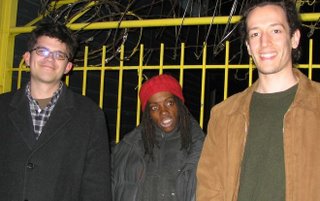
If the predator is engaged, a request for change quickly becomes a demand for a dollar, then a twenty, then a blow to the head as soon as the victim refuses. This kind of escalation is common with young gangs who quickly befuddle their prey with unrelated questions and demands from all directions. As the victim struggles with the insistent demands and questions, the gang will begin positioning itself for attack. These criminals work like sharks, first brushing their victim, then bumping it, and finally going after the victim is a swirl of blood and gore as others also jump in.

The most feared predator is the one who uses the silent selection process. This criminal watches the parade of people passing by, while trying to blend into the scenery. He wants to be neither seen or remembered. Once he recognizes and selects a victim, he knows he needs the right time and place to launch his attack. He may follow his selected victim to a more promising location. If he follows his victim, he knows that he must go unrecognized as a predator. He is the tiger in the jungle, relying on stealth to get close enough to quickly subdue his prey. Like the tiger, he leaves his lair to hunt. He may stalk his victim for long periods of time. He may lose interest in a selected victim that never knew he was there. He may follow the victim until the victim enters an area where an attack can be successful. If the time and place are already in his favor when the victim is selected, however, the victim will be like the fly who fails to recognize the chameleon among the leaves. Thankfully, these predators who use the silent selection process are not as common as other predators. They are, however, highly effective, giving the victim very little warning. The key to recognizing them is the last chance of conflict avoidance.

Positioning
The final indicator of an impending attack is positioning. Once positioning commences, the victim has been selected, and an attack is imminent unless immediate action is taken. Positioning is recognizable by escape routes being cut off if the attacker is alone. In the case of multiple predators, attackers will both surround and approach from vulnerable angles. This is the jackal approach to the hunt. Once it occurs, the only choice the victim has is to either fight for their life or pray for the predator's generosity. If the predator moves into position, he has already decided that his victim is prey. He will attack. The only thing that will stop the attack is the sudden realization he has made a fatal error and chosen a superior predator. Proof of this mentality is the many incarcerated criminals who believe their last victim somehow victimized them instead.

And this, finally, is where citizens arming themselves against criminals need to focus. Armed citizens like to think of themselves as sheepdogs. However, inside every sheepdog is a lineage that can be tracked back to the wolf. The sheepdog understands the wolf because he is a wolf with another purpose. He is a predator as well.

Labels: ,

Monday, May 17, 2010

From the Archives ~ Recognizing Threats

A couple of weeks years ago I wrote a post on the realities of surviving a gunfight. Much of my writing focused on the need to avoid the conflict. Many believe that they can avoid conflict by avoiding particular areas. This is not always the case. A person must go about one's life, and the criminal element does the same. A person may be more likely to be attacked in certain areas, but they can be victimized virtually anywhere. Indeed, they are often less prepared in their own element. Conflict avoidance requires threat recognition.

To recognize threats, one has to understand how the criminal mind works. The criminal is a predator. He (or she) sees the world as having two types of people.....Other predators and prey. Many honest gun owners like to think of themselves as "sheepdogs" but to the criminal, the sheepdog is simply another brand of predator. Like other beasts, it is a matter of survival for the criminal to prey on those weaker than themselves. To select the wrong victim is to become prey. If you want to survive in the criminal's world, you must be seen as a superior predator. Once you understand the criminal's thought processes, most attacks can be avoided simply by removing oneself from the victim selection process. There are several steps to victimization.

Intent
This is when the criminal decides to commit a crime. He likely has not selected a victim yet. Internally, however, the criminal has made the decision that he must fill a need, whether it be money to pay off his grandma's medicine bill, or cash to buy a bit of crack. He has decided to go to work. He may work alone, or with others, but like anyone else who goes to work, the working criminal's body language and demeanor changes. The criminal must disguise his intent, however, lest he be snared by the ultimate predator, the police. Thus, the working criminal lies in wait, like a lion in the grass, waiting for suitable prey. He is observant, and he will toss out bait to potential prey to see if he gets a nibble. Often, a criminal team will place the least threatening member in view to test potential prey while the others on the team remain hidden. He is not a fisherman, however, he does not require a nibble. The criminal is a predator. Failure to nibble at the bait is also a sign of potential prey. Remember, the only way to be left alone by this predator, or team of predators, is to be seen as a superior predator.
A superior predator may not attack, but they will always recognize other predators. If the criminal is recognized by someone he sees as an equal or superior predator, he will stay in the shadows as long as he or his territory is not threatened. If the recognition comes from someone he sees as prey, however, he begins to work in earnest.

Selection
The criminal, once he has observed a potential victim, will send out some test runs to determine if the person is indeed prey, or predator. These tests may be asking for a match, the time, or change. The initial tests all have one thing in common. They violate boundaries, and determine if the selected person will allow their space and generosity to be violated. The predator is mimicking a common panhandler to get in close, test the waters and position himself for attack. All of these persons are easily recognized by their inappropriate behavior and boundary violations. Like the fish who fails to recognize the moray eel on the reef, the person who fumbles for change with a predator has sealed their fate. The ruses are many and varied. I have seen crackheads target tourists and ask to get their pictures taken. I have seen balloon ladies that had accomplices working in the shadows. I have seen young women toss out lewd comments as their male accomplices tried to blend into the landscape. I have seen kids sitting on trash cans in housing projects while older gang members waited around the corner. I have even seen one teen lay on the side of the road in the projects waiting for a good Samaritan as his accomplices hid behind a dumpster. Like the anglerfish, these predators actively dangle lures to allow them to catch prey. To be seen as a potentially superior predator, one must simply recognize the threat, refuse to engage, and continue without alarm.
If the predator is engaged, a request for change quickly becomes a demand for a dollar, then a twenty, then a blow to the head as soon as the victim refuses. This kind of escalation is common with young gangs who quickly befuddle their prey with unrelated questions and demands from all directions. As the victim struggles with the insistent demands and questions, the gang will begin positioning itself for attack. These criminals work like sharks, first brushing their victim, then bumping it, and finally going after the victim is a swirl of blood and gore as others also jump in.

The most feared predator is the one who uses the silent selection process. This criminal watches the parade of people passing by, while trying to blend into the scenery. He wants to be neither seen or remembered. Once he recognizes and selects a victim, he knows he needs the right time and place to launch his attack. He may follow his selected victim to a more promising location. If he follows his victim, he knows that he must go unrecognized as a predator. He is the tiger in the jungle, relying on stealth to get close enough to quickly subdue his prey. Like the tiger, he leaves his lair to hunt. He may stalk his victim for long periods of time. He may lose interest in a selected victim that never knew he was there. He may follow the victim until the victim enters an area where an attack can be successful. If the time and place are already in his favor when the victim is selected, however, the victim will be like the fly who fails to recognize the chameleon among the leaves. Thankfully, these predators who use the silent selection process are not as common as other predators. They are, however, highly effective, giving the victim very little warning. The key to recognizing them is the last chance of conflict avoidance.

Positioning
The final indicator of an impending attack is positioning. Once positioning commences, the victim has been selected, and an attack is imminent unless immediate action is taken. Positioning is recognizable by escape routes being cut off if the attacker is alone. In the case of multiple predators, attackers will both surround and approach from vulnerable angles. This is the jackal approach to the hunt. Once it occurs, the only choice the victim has is to either fight for their life or pray for the predator's generosity. If the predator moves into position, he has already decided that his victim is prey. He will attack. The only thing that will stop the attack is the sudden realization he has made a fatal error and chosen a superior predator. Proof of this mentality is the many incarcerated criminals who believe their last victim somehow victimized them instead.

And this, finally, is where citizens arming themselves against criminals need to focus. Armed citizens like to think of themselves as sheepdogs. However, inside every sheepdog is a lineage that can be tracked back to the wolf. The sheepdog understands the wolf because he is a wolf with another purpose. He is a predator as well.

Labels: ,

Wednesday, November 07, 2007

Analysis of a Mugging

A few months back, I wrote about the importance of recognizing threats so that they could be avoided. The absolute best way to survive an encounter with a criminal is to never be accepted into his victim selection process. If the victim selection process can not be avoided, then disrupting the criminal's expectations is essential to forcing him to abort the attack.

A victim is selected.
At this point, the victim has been selected by a criminal who is at "work". The criminal has probably made contact, speaking to the potential victim, asking her for something, invading her privacy. This is an attempt to probe and assess her willingness to be victimized. The victim walks past, leaving her back to the criminal. She is doing exactly what the criminal is hoping, indeed, expecting she will do. She is open to attack.

Positioning
The first criminal makes the initial contact, but he is not working alone. A second criminal has positioned himself to cut off escape routes. As the first criminal takes down the victim, using the curb to destroy her balance, a taxi driver/witness observes the attack.

Help?
Help arrives, but who is the red haired youth assisting? The victim kicks frantically as another bystander is alarmed and is trying to decide whether to help, run, or stay put.

Tactics Revealed
The red haired youth's motives are revealed as the two criminals, acting in concert, hold down the victim and take her belongings. She is helpless. By this time, if she had a gun on her hip, it would be in the possession of the criminals.

Escape
The criminals run away in different directions, enhancing their chances of escape. The victim struggles to her knees, no doubt poorer and feeling violated. The bystander still has not chosen his course of action, and by doing nothing, has acted.

What is immediately apparent in this series of photos is the lack of awareness. The victim was blissfully unaware of her impending plight. Her attack was not the result of not having a means of self defense. Her attack was the result of understanding the first line of self defense is removing oneself from the victim selection process by any means available.

A criminal is, by his nature, a predator. A predator must know his prey to be successful. Once prey is identified, an attack from a hungry predator is almost assured. A potential victim can avoid attack in two ways.

A person can avoid being seen by the predator. Be somewhere else. Life is full of choices. One may chose to walk where predators lurk, whether in the streets of a metropolis or in the grasses of Africa, but if a person walks though the grasses of Tsavo, they should be prepared for lions. When such a jaunt is unavoidable, awareness must be increased.

One may also be seen as a superior predator. The criminal fears the armed citizen more than the police. The criminal knows exactly what to expect from law enforcement. They discuss it, study it. The prepare for it, and have likely learned from experience.

The armed citizen is the wild card that the criminal never knows how to predict, or when it might appear. The armed citizen may run. The armed citizen may resist. The armed citizen may shoot, and may kill. While not a predator, the armed citizen is viewed by the criminal jackal as being the lioness he does not want to tangle with.

Most criminals will quickly avoid an attack on a random person they believe to be armed. The benefits are simply not worth the risks. In free states, the armed citizen is the one variable the criminal can not predict, but must be prepared for. The actions of the armed citizen are even more unpredictable. The response of the criminal to the armed citizen is often abortion of the attack and escape.

Because the armed citizen is frequently as unrecognizable as the criminal, the criminal must rely on the recognition of behavior to avoid the threat of being shot. The most common behavior difference between the armed and unarmed citizen is awareness. Thus, the increased awareness of a person also deters the thinking criminal. The gun is loaded for the criminals who do not think. There are enough of those to justify carrying a gun.

Labels:

Wednesday, August 20, 2008

Standing on the X

After I encountered the story of Keith Labrozzi, and that of Stephen Swan and Matthew Butler, I felt compelled to share a few of my lessons learned. I don't know it all, I am no self defense guru, but I have been in and out of some damned spooky places and situations both in the States and third world countries of the Orient. I had the advantage of learning to protect myself through avoidance in countries where I did not speak the language very well. Advantage? Yes. I did not respond to the verbal tactics used to bewilder a victim and place them off guard. To remain safe, I had to study the body language and tactics of those who would do me harm. I found that criminals share many commonalities as they go about their business. There is a lot of bad information, assumptions and beliefs out there, only one of which is the gun being a magic talisman. Hopefully, I will address a couple more here.

Sometimes, because of events I have experienced in my life, I have a fatalistic point of view. When your number is up, when you are standing on that X,......Well, everyone has to die sometime.

But then, as a nurse, I know not everyone dies immediately. Some victims of crime are crippled. Some are paralyzed. Some jockey wheelchairs and wear colostomy bags. They develop decubitus ulcers that demand constant care, lest they become infected, creating sepsis and killing the victim, concluding a tragic chain of events years after a victim's bad decision and a criminal's actions set them in motion. Other victims survive on life support, brain dead, unknowingly generating years of agony and turmoil over every medical and nursing decision their loved ones are forced to face. I do not want to do that to my wife and children.

When I worked Home Health, providing specialized wound care in some of the most crime infested areas of a poverty stricken state, I carried redundant guns. One was on my hip under my lab coat, or in a SmartCarry holster if I was wearing scrubs. One was my nursing bag, secured in a middle compartment, velcroed shut. That bag was actually a soft sided briefcase designed to carry a gun. I recommend a similar bag to every nurse or physician I teach. In my pocket I carried a revolver, because I expected the struggle to be in confined spaces, quickly going to the ground, with the firearm jammed in the criminal's ribs. In the back of my Jeep Cherokee, I carried an aluminum baseball bat, my non-lethal weapon.

Twice over a period of eleven years of this type of work, I felt compelled to draw a weapon. Once, I pulled the bat. Each time, the event could have been avoided by better planning on my part. The learning curve was steep, but I was learning.

There are reasons why a grammar school dropout who cannot multiply 26 by 4 is able to outwit and victimize a person who is of demonstrably higher intelligence and social proficiency.

First, the criminal does this for a living. They are not as dumb as many think they are. If you fail to respect their level of skill, you will be unprepared to deal with them. They are not dumb. They just attended a different "school" and studied a different "curriculum". To understand and predict their behavior, you must know a bit of that curriculum as well. Understanding the behaviors and motivations of different types of criminals is the framework with which a wise person protects themselves. Know your enemy. Then practice avoidance if you can. If avoidance is impossible, try evasion. Try both of these tactics prior to defense. You do not have to "win" a dangerous encounter. Nobody wins a gunfight. They simply survive.

The next reason that a criminal can overcome a victim is they have a plan. They are acting offensively, while the victim is reacting defensively. By having a plan in place before contact is made, the criminal has a distinct advantage. They have considered contingencies. They know what they are going to do. They often work in numbers, confusing and surrounding the victim beforehand. They know what's coming. The victim does not. Know how the criminal works. He has a plan, and is looking for a victim to impose the plan on. The criminal has considered, and quite possibly experienced the reactions he will receive from his victim before the fact. Having a plan of action to deal with criminal activities is vital once you have been targeted. There is no one plan to fit every contingency. Having a counter plan is good, but removing yourself from the victim selection process is a far superior tactic.

The active criminal conceals their intent until they have selected a victim, moved in for the attack, and possibly made a couple of probes to assess the victim's responses. Recognizing the criminal's actual intent is vital. That gives you the edge to counter his plan with a plan of your own. The most frequent mistake that a victim makes is the failure to recognize the threat until it is to late. The criminal works with behavioral devices to conceal his actual purpose. The potential victim must see through the veil and recognize the actual intent if they are to counter the criminal. The criminal may be a scruffy crackhead, or they may be an attractive member of the opposite sex. They may be working alone, or in groups, either seen or unseen. They may even be an angry family member.

Once the criminal's plan is set in motion, the victim must seize the initiative. They must place the criminal on the defense. They must force him into the role of the person who is reacting to the unexpected. Your gun may be unexpected, or it may not be. It is your choices, your behavior that must redirect the conflict, not your firearm.

Analyzing when you are most vulnerable is key. Military men know that insertion is not the time of vulnerability. Extraction is. Crimes that occur when a person is entering a building are often crimes of opportunity, the work of amateurs. The criminal is easily disengaged. This is also a time when a more experienced criminal will size you up. They will sometimes make the first contact on your entrance, knowing that an exit is soon to follow. Crimes that occur when a person exits a building are much more likely to be targeted towards the specific individual, and be premeditated. The criminal knows your presence when you are leaving. While you were otherwise engaged, he was formulating his plan, and perhaps gathering allies. He possibly even knows the path you will take, as it is usually the most direct one to your vehicle. These are much more difficult to avoid and disengage from.

I knew that I was most vulnerable when I left an apartment or house in the crime and gang infested areas where I worked. Before I opened the door of an apartment to leave, I would take a look outside the window. The patients understood why, hell they lived there. I always, on the first patient contact, explained that I did not carry drugs, syringes (a lie), money, or valuables. I wore an ugly old Timex. I carried a beat up camera for wound documentation......I actually took sandpaper to it to make it less desirable. I drove a humble Grand Cherokee with a dented fender and ugly rims. I made certain the young men in the home, often involved in illegal if not outright gang activity, knew my purpose. I was there to provide nursing service, not to act as a police informant. I made sure they knew I would pull out and not only let them rot, but impede further care by other agencies if I was threatened. I did not equivocate on these issues. Often, these young men would serve as my protection against the threats as I came and went about my business. I would talk and listen as I worked, gathering information not just on specifics, but on the emotional climate of the area. I made mental notes of who came and went in the homes, the layout of the homes, as well as blankets hung in doorways and doors padlocked shut. One of the odd beliefs in these areas is that law enforcement needed a separate search warrant for padlocked doors inside a home. Thus, a padlocked door indicated illegal activity within the home. All good information to know. Even though young men or women, often seen as criminals, might serve as my protectors in these neighborhoods, I kept my distance and would not allow them to walk me to my vehicle. They knew why.

I would park where I had alternate routes to my vehicle. I would keep open space around me and structures and objects as much as possible. I made myself a difficult target. Still, I had to approach my Jeep. The criminals knew where to lie in wait. Thus, I was careful to park where I would have some room to see my attacker as he approached my vehicle, and where I could observe the vehicle from inside the home. Time and distance were my protection. I had a square convex mirror stuck on the rear glass of the Cherokee's hatch so I could see an approach from behind as I opened it. I had remote controlled door locks, and I disabled the passenger side and rear outside door handles. I kept the batteries changed in the door remote, giving me max power in opening them, and I kept the Cherokee maintained with a full gas tank.

Today, my situation is different, but I still take the time to realistically recognize my vulnerabilities, and to raise my level of awareness when I am most vulnerable. It is the heightened awareness that prevents a person from being victimized, not the gun concealed on their person.

Drawing and using a gun is only a part of one plan. It is a possible counter action, but not the only one. Keeping your back to the wall in a restaurant is only one technique. We plan for crimes that we hear about, the ones that make the 6:00 news. Most crimes do not occur as the spectacular robbery with multiple patrons in a restaurant or bar. They occur when the victim is alone and vulnerable, in a laundromat, walking a dog, or approaching their automobile or front door. These opportunities for criminals to ply their trade must be countered as well. Gunfighting is not about guns, it's about fighting. You must be willing and able to fight, and fighting is about survival. The gun is only a means of increasing your advantage in a struggle for life and survival. The best way to survive is to recognize and avoid or offset the threat altogether. Survive at all costs.

Related: When Being a Good Guy Isn't Enough
A Tactical Analysis of the Tyler Courthouse Shooting and the Tacoma Mall Shooting
By Syd

Labels: ,

Sunday, May 30, 2010

From the Archives ~ Standing on the X

After I encountered the story of Keith Labrozzi, and that of Stephen Swan and Matthew Butler, I felt compelled to share a few of my lessons learned. I don't know it all, I am no self defense guru, but I have been in and out of some damned spooky places and situations both in the States and third world countries of the Orient. I had the advantage of learning to protect myself through avoidance in countries where I did not speak the language very well. Advantage? Yes. I did not respond to the verbal tactics used to bewilder a victim and place them off guard. To remain safe, I had to study the body language and tactics of those who would do me harm. I found that criminals share many commonalities as they go about their business. There is a lot of bad information, assumptions and beliefs out there, only one of which is the gun being a magic talisman. Hopefully, I will address a couple more here.

Sometimes, because of events I have experienced in my life, I have a fatalistic point of view. When your number is up, when you are standing on that X,......Well, everyone has to die sometime.

But then, as a nurse, I know not everyone dies immediately. Some victims of crime are crippled. Some are paralyzed. Some jockey wheelchairs and wear colostomy bags. They develop decubitus ulcers that demand constant care, lest they become infected, creating sepsis and killing the victim, concluding a tragic chain of events years after a victim's bad decision and a criminal's actions set them in motion. Other victims survive on life support, brain dead, unknowingly generating years of agony and turmoil over every medical and nursing decision their loved ones are forced to face. I do not want to do that to my wife and children.

When I worked Home Health, providing specialized wound care in some of the most crime infested areas of a poverty stricken state, I carried redundant guns. One was on my hip under my lab coat, or in a SmartCarry holster if I was wearing scrubs. One was my nursing bag, secured in a middle compartment, velcroed shut. That bag was actually a soft sided briefcase designed to carry a gun. I recommend a similar bag to every nurse or physician I teach. In my pocket I carried a revolver, because I expected the struggle to be in confined spaces, quickly going to the ground, with the firearm jammed in the criminal's ribs. In the back of my Jeep Cherokee, I carried an aluminum baseball bat, my non-lethal weapon.

Twice over a period of eleven years of this type of work, I felt compelled to draw a weapon. Once, I pulled the bat. Each time, the event could have been avoided by better planning on my part. The learning curve was steep, but I was learning.

There are reasons why a grammar school dropout who cannot multiply 26 by 4 is able to outwit and victimize a person who is of demonstrably higher intelligence and social proficiency.

First, the criminal does this for a living. They are not as dumb as many think they are. If you fail to respect their level of skill, you will be unprepared to deal with them. They are not dumb. They just attended a different "school" and studied a different "curriculum". To understand and predict their behavior, you must know a bit of that curriculum as well. Understanding the behaviors and motivations of different types of criminals is the framework with which a wise person protects themselves. Know your enemy. Then practice avoidance if you can. If avoidance is impossible, try evasion. Try both of these tactics prior to defense. You do not have to "win" a dangerous encounter. Nobody wins a gunfight. They simply survive.

The next reason that a criminal can overcome a victim is they have a plan. They are acting offensively, while the victim is reacting defensively. By having a plan in place before contact is made, the criminal has a distinct advantage. They have considered contingencies. They know what they are going to do. They often work in numbers, confusing and surrounding the victim beforehand. They know what's coming. The victim does not. Know how the criminal works. He has a plan, and is looking for a victim to impose the plan on. The criminal has considered, and quite possibly experienced the reactions he will receive from his victim before the fact. Having a plan of action to deal with criminal activities is vital once you have been targeted. There is no one plan to fit every contingency. Having a counter plan is good, but removing yourself from the victim selection process is a far superior tactic.

The active criminal conceals their intent until they have selected a victim, moved in for the attack, and possibly made a couple of probes to assess the victim's responses. Recognizing the criminal's actual intent is vital. That gives you the edge to counter his plan with a plan of your own. The most frequent mistake that a victim makes is the failure to recognize the threat until it is to late. The criminal works with behavioral devices to conceal his actual purpose. The potential victim must see through the veil and recognize the actual intent if they are to counter the criminal. The criminal may be a scruffy crackhead, or they may be an attractive member of the opposite sex. They may be working alone, or in groups, either seen or unseen. They may even be an angry family member.

Once the criminal's plan is set in motion, the victim must seize the initiative. They must place the criminal on the defense. They must force him into the role of the person who is reacting to the unexpected. Your gun may be unexpected, or it may not be. It is your choices, your behavior that must redirect the conflict, not your firearm.

Analyzing when you are most vulnerable is key. Military men know that insertion is not the time of vulnerability. Extraction is. Crimes that occur when a person is entering a building are often crimes of opportunity, the work of amateurs. The criminal is easily disengaged. This is also a time when a more experienced criminal will size you up. They will sometimes make the first contact on your entrance, knowing that an exit is soon to follow. Crimes that occur when a person exits a building are much more likely to be targeted towards the specific individual, and be premeditated. The criminal knows your presence when you are leaving. While you were otherwise engaged, he was formulating his plan, and perhaps gathering allies. He possibly even knows the path you will take, as it is usually the most direct one to your vehicle. These are much more difficult to avoid and disengage from.

I knew that I was most vulnerable when I left an apartment or house in the crime and gang infested areas where I worked. Before I opened the door of an apartment to leave, I would take a look outside the window. The patients understood why, hell they lived there. I always, on the first patient contact, explained that I did not carry drugs, syringes (a lie), money, or valuables. I wore an ugly old Timex. I carried a beat up camera for wound documentation......I actually took sandpaper to it to make it less desirable. I drove a humble Grand Cherokee with a dented fender and ugly rims. I made certain the young men in the home, often involved in illegal if not outright gang activity, knew my purpose. I was there to provide nursing service, not to act as a police informant. I made sure they knew I would pull out and not only let them rot, but impede further care by other agencies if I was threatened. I did not equivocate on these issues. Often, these young men would serve as my protection against the threats as I came and went about my business. I would talk and listen as I worked, gathering information not just on specifics, but on the emotional climate of the area. I made mental notes of who came and went in the homes, the layout of the homes, as well as blankets hung in doorways and doors padlocked shut. One of the odd beliefs in these areas is that law enforcement needed a separate search warrant for padlocked doors inside a home. Thus, a padlocked door indicated illegal activity within the home. All good information to know. Even though young men or women, often seen as criminals, might serve as my protectors in these neighborhoods, I kept my distance and would not allow them to walk me to my vehicle. They knew why.

I would park where I had alternate routes to my vehicle. I would keep open space around me and structures and objects as much as possible. I made myself a difficult target. Still, I had to approach my Jeep. The criminals knew where to lie in wait. Thus, I was careful to park where I would have some room to see my attacker as he approached my vehicle, and where I could observe the vehicle from inside the home. Time and distance were my protection. I had a square convex mirror stuck on the rear glass of the Cherokee's hatch so I could see an approach from behind as I opened it. I had remote controlled door locks, and I disabled the passenger side and rear outside door handles. I kept the batteries changed in the door remote, giving me max power in opening them, and I kept the Cherokee maintained with a full gas tank.

Today, my situation is different, but I still take the time to realistically recognize my vulnerabilities, and to raise my level of awareness when I am most vulnerable. It is the heightened awareness that prevents a person from being victimized, not the gun concealed on their person.

Drawing and using a gun is only a part of one plan. It is a possible counter action, but not the only one. Keeping your back to the wall in a restaurant is only one technique. We plan for crimes that we hear about, the ones that make the 6:00 news. Most crimes do not occur as the spectacular robbery with multiple patrons in a restaurant or bar. They occur when the victim is alone and vulnerable, in a laundromat, walking a dog, or approaching their automobile or front door. These opportunities for criminals to ply their trade must be countered as well. Gunfighting is not about guns, it's about fighting. You must be willing and able to fight, and fighting is about survival. The gun is only a means of increasing your advantage in a struggle for life and survival. The best way to survive is to recognize and avoid or offset the threat altogether. Survive at all costs.

Related: When Being a Good Guy Isn't Enough
A Tactical Analysis of the Tyler Courthouse Shooting and the Tacoma Mall Shooting
By Syd

Labels: ,

Tuesday, July 15, 2008

Evil Among Us

On June 18, 2008, two Texarkana teens rode the train from Dallas to downtown Garland Texas. They planned to commit a crime. Demarius Cummings claims he and his cousin, James Broadnax, were not planning on committing murder in Garland, only robbery. Demarius Cummings and James BroadnaxThey had stolen their aunt's "chopper" (a Kalashnikov rifle) to swap on the street for a pistol, and taken the handgun on the trip. The two discussed killing, but Cummings claims he did not believe it would happen. Broadnax concealed the pistol, and the two boarded the night train to Garland.

In Garland, in the early morning of June 19, the two encountered Matthew Butler and Stephen Swan who were leaving Zion Gate Records, a Christian music studio which Butler owned, at 810 State Street. The four men conversed for a while. The men parted, and then Cummings went back with Broadnax and asked for a cigarette. Suddenly, Broadnax pulled his gun. Without hesitation he shot Swann, then Butler. As each man struggled to get back up, Broadnax shot them again, this time in the head, killing them.

The two murderers quickly rifled the dead men's pockets, stole two dollars, and the keys to Butler's car. Stephen Swann and Matthew ButlerThey drove Butler's tan 1995 Crown Victoria to Dallas, and hid the pistol. The next morning they switched the license plates at a relative's house, swapped the pistol back for the AK, pawned a few tools found in Butler's car, and tossed Stephen Swann's ID out the car window as they left in the stolen automobile heading back to Texarkana. There, they were apprehended after a traffic violation. A bicyclist had discovered the two dead men's bodies lying in a pool of sticky blood and spent shell casings at about 1:00 AM the previous night. Both criminals are charged with capital murder. Bond is set at one million dollars each. Both victims are dead.

Those are the facts of the case. There are other facts that may not be as apparent, however. One is that these two men were prowling Garland Texas for a victim, or two. They were not carrying an illegally concealed weapon for self protection against criminals. They were carrying an illegally concealed weapon to use in victimizing an honest citizen. These two men did not stop their victims on the street to discuss recording contracts. They did not ask for a cigarette because they were hungry for nicotine. A package of Marlboros would not have saved Matthew Butler and Stephen Swan.

These two thugs did not go to Garland Texas to buy, bum or steal a pack of smokes. In Cumming's own words, they went there because "dat's where the rich white folks stay at." These two thugs stopped two honest citizens and probed them to ascertain their willingness to be victimized. Chances are, one or both of the victims refused to give the two men a ride, or let them gain access to the recording studio. Then came the cigarette ploy.

The first criminal tactic that many victims of a crime recognize is a violation of the victim's right to passage, and their right to privacy. By the time this tactic is employed, the criminal has already been on the prowl with the intent of selecting a victim, and they have chosen their prey. The criminal is simply ascertaining whether or not their choice is one that will have tolerable consequences. The level of risk is commonly determined by the criminal through asking or demanding something from the victim. Whether the victim gives in to the request makes no difference to the criminal. It is the victim's reaction to the request that determines the outcome of the encounter. While this interview process is happening the criminal and their accomplices are gaining position for the inevitable attack.

So what should a person do? At this point there is only one way to stop an attack. The criminal predator is behaving like an animal, a predator. To stop the attack, the victim must quickly and unequivocally convince the criminal that he is a superior predator. The criminal predator must suddenly realize that he has encountered someone who will kill him.

Keep your distance. Recognize and refuse to allow the positioning for attack. Do not engage in the attacker's conversational ploys. Tell the attacker loudly and without hesitation to back off. Position yourself for repelling an attack, and get your hand on your gun.

Oh, yes, the gun. Reportedly, one of these two victims had a concealed carry permit. Perhaps he left his weapon at home that day. After all, he was going to a Christian recording studio. No danger there......Perhaps the victim had his gun on him, but he lacked the ability to recognize the threat. Perhaps he believed in the innate goodness of all men. Perhaps he recognized the wrongness of the encounter, but the victim lacked the initiative and willingness to employ his weapon to save his own life. One thing is certain, however, by the time a cigarette was requested, this encounter on the streets of Garland Texas could only have been stopped through the use of deadly force.

Butler is survived by his wife Jamie, and two children. "I hope that whoever did this that they would come to know Christ," Jamie Butler said tearfully. "I hope and pray that my husband gets a chance to meet them in heaven and gets a chance to shake their hand and gets a chance to forgive them himself." May the souls of Matthew Butler and Stephen Swan rest in peace, and may we learn from their mistakes.

Below is a jailhouse confession from James Broadnax. James Broadnax, Confessed MurdererDo not watch this video if you want to remain ambivalent about carrying the means for your own self protection. In the video you will see a sociopathic killer blaming his victims for causing him to "go into dat mode" and causing him to kill them. You will see utter and unmitigated lack of remorse. You will see stupefying excuses for a life that he himself wasted, his own, but which he takes absolutely no responsibility for. You will see not only total disregard for the human lives he destroyed, but also the most vulgar contempt for the grief of the families left behind. You will see inexcusable evil personified. You will see the evil that walks among honest citizens in every city in the U.S. You will see why I carry a gun, and why I train to use it to protect my life.


The confession of Demarius Cummings can be viewed here.

Update: Stephen Swan did indeed leave his gun at home that night.
Read his CHL instructor's letter here.

Labels: , ,

Thursday, May 28, 2009

Robbery Victim Charged with Murder

An Oklahoma City pharmacist has been charged with first degree murder after shooting a robber 6 times. The prosecutor says the first shot was justified, but the defender went too far when he shot the teen 5 more times with a .380 caliber pistol while he lay unconscious on the floor. "I do not want the charging of Jerome Ersland with first degree murder to have a chilling effect on any person legitimately in a position to defend themselves from an assailant," Oklahoma County District Attorney David Prater said in a news conference.


On May 19, 2009, Antwun Parker and Jevontia Ingram, both teenagers burst into the Reliable Discount Pharmacy wearing masks and carrying a gun. The pharmacist, Jerome Ersland, shot Parker in the head, and then chased the other threat out of the pharmacy. When he returned, the robbery victim took up a second handgun, and shot the fallen robber five more times in the abdomen.

Oklahoma County District Attorney David Prater asserts armed robbery victim was justified in shooting Antwun Parker once in the head. However, Prater claims Mr. Ersland broke the law when he shot Parker again while the teen lay unconscious on the floor. Mr. Ersland says the injured criminal was attempting to get up. He further states he grabbed the second handgun before he chased Jevontia Ingram from the phatmacy.

Ersland's attorney, Irven Box, says his client was protecting himself and two women inside the pharmacy. In court, the District Attorney showed a security video (seen above) in which two criminals burst into the pharmacy. One criminal is shot. Ersland is seen chasing the second man outside. Then he walks past Parker to get a second gun. Finally, he is seen firing at Parker again. The autopsy found Parker was still alive after the head shot and died from the stomach wounds.

Mr. Ersland did not burst into Antwun Parker's place of business to kill him. Antwun Parker came to Mr. Ersland forcibly demanding money and drugs while placing an innocent victim's life at risk. Nobody has forgotten who the aggressor was, nor who the victim was. Even so, the victim may well lose everything because a teen aged punk decided to victimize him.

It is often taught that a threat must be shot until it is no longer a threat. The security video does not show the last seconds of Antwun Parker's wasted life. If it did, Mr. Ersland might never have been charged. Unfortunately, the video does show the actions of Mr. Ersland. These actions are open to interpretation. Mr. Ersland has posted $100,000 bail after a preliminary hearing. His attorney believes a jury will rule in the pharmacists’ favor.


Labels: ,

Sunday, November 18, 2007

Three Responses


Recent surveillance video from The Rowan County, North Carolina Sheriff office shows the beginning of an armed robbery of a convenience store just off Interstate 85. As the clerk turns to face the criminal she finds a gun in her face. She slaps the gun away, taking herself out of the line of fire, but then she crumples as her attacker brings it back to bear. she is ushered off to a back room, or to the cash register, the video does not show subsequent events.

In the interest of learning, I would like to examine these actions. At one time, the attacker had both hands spread apart, with the victim in between them. He was wide open to a blow to the throat. Prior to that, in sweeping the gun to the side, the victim had her hand or arm on her attacker's arm. Gaining control of the firearm was an option. A semi-auto handgun pushed out of battery will not fire. A revolver with a death grip around the cylinder will not fire. A finger caught in the triggerguard will be quickly fractured when an adrenaline pumping victim wrenches it from the attacker's grasp.

This victim, however, quickly assumes her role in the robbery after her initial resistance and follows her assailants directions as he orders her off camera. I hope she lived.

One cannot expect every grandmother to respond like Bruce Lee. Or can you? Often it is not the slick move that overcomes the opponent, it is the will to persevere and prevail. It is the will to take advantage of an attacker's weaknesses and mistakes, and fight for one's life. When a victim willingly submits to an attacker's threats and demands, they try to control an unreasonable person with reason. They take on a dependent role, depending on their attacker's generosity for their very survival. I will not judge how any person decides to lead their lives, and I can not judge how any person manages to survive an attack, but one must acknowledge that submission is placing one's very life in the sanctum of a sociopath's benevolence. That is a personal choice, but the reality surrounding it must be recognized.

Compare the first video with these two.


Labels:

Tuesday, February 28, 2006

Robbery Foiled in Miami

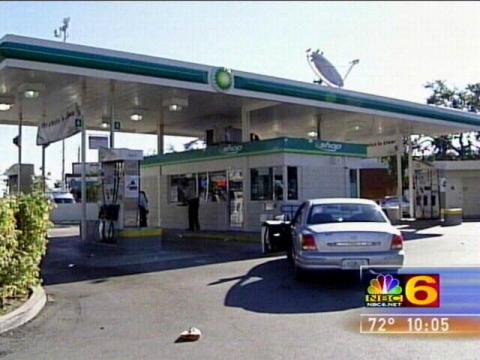
Miami-Dade County police say a man shot and killed another man who was trying to rob him at a gas station early this morning. Police said the victim was approached by an armed man at a BP gas station on West Dixie Highway at about 4 a.m. Gas station employees said the robber was a 22-year-old man who went by the street name "S.P." A witness said S.P. came into the parking lot, saw the victim wearing a gold chain, pulled a gun and demanded that he hand over the chain, NBC 6's Jeff Burnside reported. The victim was also carrying a gun. Police said he shot and killed the robber during a confrontation.

Police found evidence that both the robber's and the victim's guns were fired. The gas station owner, Cesar Gaiton, said a cashier counted at least seven shots, some of which hit the food store. "She was screaming. When she called me, I said, 'Hello.' She was screaming, 'Somebody shot somebody in his face,'" Gaiton said.

"From what we gather at this point is that he did have a permit for the firearm. He did utilize the firearm, at this point, from what it seems, in self-defense. But, that's why the interview process and all the information gathering remains the same, like any other case," said Alvaro Zabaleta, of the Miami-Dade County police. The victim was taken to Miami-Dade Police Department for questioning. Detectives believe the robbery attempt was random and the shooting was apparently in self-defense. An investigation continues.

"Somebody shot somebody in his face" Yep. That'll do it. One less thieving scumbag. Good show.

Tuesday, March 14, 2006

The Gift of Fear

How does one know when an attack is imminent?
How does one tell when a verbal confrontation is about to escalate into a physical fight?
How does one discern whether an adversary has lethal intent or is trying to intimidate?

Intuition is perhaps the most valuable asset a potential victim of crime can have. Without intuition, a victim will invariably wait until an attack begins before reacting. By that time the outcome of the encounter is almost a forgone conclusion. Later, if the victim survives, they often wonder what they could have done to avoid the encounter. What did they miss? How could they have known? Friends gather to comfort the victim, and themselves, by saying nobody can predict random violence. They are wrong. It does not have to be that way.

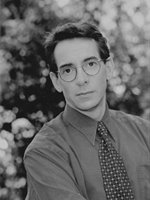
Gavin deBeckerIn 1997, Gavin deBecker wrote a landmark book in the dual fields of criminal psychology and self defense, The Gift of Fear. DeBecker's work in the field of predicting criminal behavior earned him three Presidential appointments and a position on a congressional committee. He was twice appointed to the President's Advisory Board at the U.S. Department of Justice, and was a principal advisor on the federal research project into mentally ill people who stalk public figures. He served two years on the Governor's Advisory Board at the California Department of Mental Health. He is currently co-chair of the Domestic Violence Council Advisory Board and a Senior Fellow at the UCLA School of Public Policy. As a consultant to many major media figures, government agencies, Fortune 500 companies, and universities, he has overseen the assessment and management of more than 25,000 cases. Clients include the Central Intelligence Agency, the U.S. Supreme Court, the U.S. Marshals Service, the Los Angeles County District's Attorney's Office, and many others.
In The Gift of Fear, deBecker explores the idea that the human animal is the only animal that rationalizes away it's fear. Every other animal on the planet uses survival instincts to avoid attack and thus continue to live. In humans these instincts are known as intuition. Because intuition is not logical and not understood, it is discounted. That is a mistake.

I first read The Gift of Fear back in 1998. This book is often overlooked in the realm of armed self defense, simply because deBecker is not a gun advocate. A book does not need to advocate concealed carry of lethal weapons to be relevant to self defense. The Gift of Fear is a very relevant book for those who have considered the acute possibility of a lethal attack in their future, and who want to prepare for it. Violent acts do not occur without warning. Trusting and honing one's intuition, or gut feelings if you prefer, will allow you to see the warning signs, and may save your life. The Gift of Fear is an engrossing read, but more importantly, it will place you on the path of fostering that intuition.

Labels: ,

Tuesday, January 08, 2008

Bathroom Attack

Milton Florida---A Santa Rosa County woman is alive tonight because she fought off an intruder. According to deputies, Chris Price broke into a woman's home on Javid Road in Milton Monday morning around 9:30. He was hiding in the shower. When the victim walked into the bathroom, Price jumped out and held a gun to her head. The woman managed to get the gun away from Price, then pointed it at him and pulled the trigger. But the gun did not go off.

Deputies say Price then stabbed her in the hand with a hunting knife. The knife broke off in her hand. When Price pushed her to the floor and tried to strangle her, the woman grabbed her cell phone to call 911. But Price grabbed the phone and broke it. In a sheer act of desperation, the woman pulled the broken knife out of her hand and stabbed Price. She then managed to get away and ran to a neighbor's house, who called 911.

Deputies eventually found Price hiding in a storage shed behind a home on Dalisa Road. He had blood on his hands and face. The victim was taken to Santa Rosa Hospital. After his arrest, Price told deputies he planned to sexually assault the victim. He faces numerous charges including aggravated assault, aggravated battery with a deadly weapon, kidnapping and armed burglary.


Mindset. Without mindset, one has no self defense.

Labels:

Thursday, December 18, 2008

Walking the Dog

Walking the dog is a solitary activity for most people. Walking the dog is a responsibility that builds a bond between man and animal. When I walk Ilsa, I sometimes think that she is the most perfect defense against a mugging. An attacker might doubt whether I am armed, or whether I might resist, although they would be wrong on either account. They would not doubt that the large black wolf-like creature with me would sink her fangs into their flesh if she felt I was threatened. Ilsa is a deterrent. Then, I read stories like this one from Terrell Texas.

On December 17, 2008, at approximately 10:20 PM, a citizen carried his legally concealed firearm while walking his dog in Ben Gill Park in Terrell Texas. He suddenly found himself surrounded by a pack of four teenagers intending to mug him. When one of the attackers pulled out a gun, the armed citizen responded with a gun of his own, and the willingness to use it to save his life.

The young thug with the gun, Markee Lamar Johnson, was shot in the head. His three cohorts turned tail and ran. They escaped in a black pick-up truck. The victim remained at the scene and called 911 on his cell phone. "I shot one guy. I think he's dead. He hasn't moved at all," the victim said.

Responding police found Johnson sprawled on the ground with incapacitating head injuries. His stolen handgun was near his body. "There's the gun right there that he had. He's moving, he's breathing still," said the victim, his cell phone connection with 911 recording his conversation with officers at the scene. The dog could be heard barking in the background. Johnson, a basketball player at Terrell High School, was transported to a local hospital. He was subsequently transferred to Parkland Memorial Hospital in Dallas, where he was pronounced dead.

The black truck, which belonged to a family member of one of the thugs, was discovered abandoned about two miles from the crime scene. Ryan Scott Patterson, 19, of Terrell was apprehended and charged with aggravated robbery. The other two offenders, while identified by police, are not yet in custody.

The citizen who faced a lethal threat while walking his dog was not injured. Police are not filing any charges. "I think in this particular situation, it would be a clear example of someone exercising their rights to protect themselves under the law," Captain A.D. Sanson said. The case will be referred to a grand jury.

Labels: ,

Wednesday, June 27, 2007

Oldest Headshot

A nearly 500-year-old skull sports the telltale signs of a gunshot wound from an antique firearm. The find, discovered recently in an Inca cemetery near Lima, Peru, was the victim of a Spanish musket, according to a detailed analysis. That makes the skeleton the oldest documented gunshot victim in the New World and possibly the first person in the Americas ever to have been killed with a firearm, experts say.

National Geographic grantee Guillermo Cock led the team that uncovered the remains. "We thought it was a person killed recently, 5, 10, or 20 years ago," Cock told National Geographic. "We didn't expect the individual would have been killed by a bullet 500 years ago."

The skeleton is one of 72 buried at the site under what must have been chaotic conditions, without the usual Inca reverence for death. experts say. The bodies were not facing the right direction, and they had been tied up or hastily wrapped in a simple cloth and buried at shallow depth, without the usual Inca adornment. Many of the skeletons were also victims of terrible violence, showing signs of being hacked, torn, or impaled. "We were not expecting to find as many traumatic injuries as we have so far," said bio-archaeologist Melissa Murphy of Bryn Mawr College.

Analysis of a plug of bone recovered intact near the skull showed the man was killed with a firearm much less forceful than modern weaponry, and the projectile's concave imprint is highly suggestive of a musket ball. In addition, detailed microscope examination of the skull and plug showed fragments of iron, a metal commonly used in Spanish ammunition.
"This gave us positive evidence that this individual died during conquest and was killed by gunfire," said Guillermo Cock, leader of the expedition that uncovered the mass Inca grave where the gunshot victim was found. "We have traces of iron on the edges of the bullet entrance and we have exit damage in the face caused by the bullet leaving the head."

Labels:

Monday, January 07, 2008

Mindset

Orlando, Florida-- A Central Florida man who collects cash for parking at a church fought off five armed men who had ambushed him and demanded cash. The 65 year old victim, who did not want to be identified, said he was collecting cash in the Parramore area before an Orlando Magic basketball game when someone put a gun to his head. He noticed that that he was surrounded by four other men as well.

The man said he pretended to reach into his jacket for cash but instead pulled out his hidden gun and opened fire. The men fled during the shooting and it was not known if any of them were hit by bullets.

The victim said he had a permit for the concealed weapon.

He said he has been a victim of crime before.

"A couple of years ago, eight teens attacked me with a pipe trying to rob me," the man said.

Some have professed that a gun on your hip is useless when a criminal puts a gun to your head. Having a gun is only part of the equation.

Labels: ,

Monday, February 09, 2009

Five Rounds

1. Be aware of yourself and your surroundings. Don't be concentrating on work, your love life or school. When you're on the street you need to be alert. Walk with head up. Walk strong.

2. If you feel afraid DO SOMETHING. Fear warns you.

3. When it is obvious that you are going to be attacked, take action at the first sign of threat.

4. If there is not time to flee, fight until you know you are safe.

5. If you carry a weapon, know how to use it. Practice with it. Have it in easy reach.
Those words are not mine. They belong to Brigid. Her words ring true. Although they were composed for daughters, Brigid's words have value to everyone who refuses to be victimized.

As I was reading Brigid's words this evening, I reflected on my eldest daughter. She is a newly minted attorney. I'm very proud of her. She carries a Makarov. My youngest has also made the commitment to never be a victim. I'm proud of her as well. In Brigid's piece, she references Hecate, who tells a story of an unfortunate whistle blower. Hecate's story also hit very close to home.

Last week, on the night shift, a nurse was walking through the lobby of the hospital she worked in, taking a stat specimen to the lab. A man came running up to her, and frantically told her that his wife was in the rest room and needed help. Like any trained nurse, the young woman responded. As soon as she opened the rest room door, the man shoved her to the floor. The young nurse was immediately in a fight for her life. She had scissors in her pocket. While blocking the blows the best she could, she pulled the scissors from her pocket.

The attacker wrestled the scissors from her grasp and stabbed her between the ribs. What happened next is still the grist of the rumor mill that exists in every hospital. The nurse went through surgery, and spent a couple of days in intensive care before she was discharged. News reports say her attacker is still at large. The rumor mill says otherwise.

The hospital administration responded predictably, advising staff to travel in pairs at night, and providing free whistles. If a nurse desired an escort to her car at the end of her shift, all she needed to do is call security and wait until an unarmed security guard is available. Because Hecate's words are so strong, I will use them here as well.
"A rangemaster at gun school who was also a sheriff's deputy once told me about a nurse who had serious ex-boyfriend problems. After responding to one of her 911 calls, he told her she should get a handgun. He offered to advise her on weapon selection and arrange for training.

She said she'd think about it, and asked her hospital colleagues what they thought. Thoroughly indoctrinated in pacifist attitudes, they were horrified and told her she should get a whistle instead. That was what she decided to do, and the deputy said he could not talk her out of it.

When her body was later found in the hospital parking lot, the whistle was still between her teeth. She had blown it until it filled up with blood as she died."
Brigid and Hecate's words have power and wisdom. I would like to add only a couple of thoughts.

Often, it is not enough to be aware and walk tall. There are those who will not be deterred by such actions. Having a means of effective self defense is imperative, but who wants to use it if they do not have to? The very act of defending oneself can cause undesirable interruptions in one's life, from court dates to actually changing the course of one's life forever. It is far better to evade than resist.

To evade, and thus survive unscathed and unencumbered, a person must be able to recognize an impending threat. These skills come through experience, or through listening to those with experience. Much of the early warning signals rely on intuition that can be easily rationalized away. As humans, we disarm ourselves of the instinctual survival skills every wild animal possesses through our denial of the realities of life and death, and through our desire for security, even if it is only an illusion.

A woman might recognize that her boyfriend is abusive, but remain in denial that he would ever be a threat. A nurse might recognize that rapes occur, but still respond as she always has when told someone frantically asks her for help. A man might believe that nobody would think of attacking him in a parking lot, until he is surrounded by five intent on robbery. A critical evaluation of our own weaknesses is the first step towards protecting ourselves. Knowing how criminals operate is crucial to predicting their behavior and evading the threat they represent.

But how does a person learn how criminals operate? Again, either through experience or listening to others. No one person can predict all tactics a criminal might use to gain the advantage prior to an attack, The tactics have common denominators though. Probing. Violations of personal space. Emotional or ethical conflict to cause the selected victim to lower defenses. Seeing the attack while the predator is still in the victim selection or location selection mode is key. Predicting the future is not easy, but there are signs that the informed person who listens to their instincts can pick up on.

A boxer does not recognize a punch being thrown by watching the gloves, but rather by sensing the hips of his opponent. Boxers who do not learn how to slip are forced to parry. If the parry will not work, the block is the next resort. However, if all a boxer knows is defensive strategy, he will cover up until beaten. He must also learn to punch. But boxing matches are not street fights, and a whistle will not end the street fight the way a bell ends a boxing match.

I picked up a whistle though. It might be useful in training my dog. For protecting myself, I will rely on something more effective. My instincts, my knowledge, and an effective repellent if needed.

Labels: ,