A Nurse with a Gun

Saturday, March 20, 2010

Clark Concealed Carry Revolver

I had just finished my last case yesterday when the cell phone in my pocket rang. Although I carry my phone with me for family emergencies, I give out the number jealously. Answering a phone in cases involves having a nurse reach under my gown to retrieve it and hold it to my ear before it stops ringing. One ring and concentration is broken. One slip and sterility is broken.

On the other end of the line was Renee at Clark Custom. "Xavier, Jimbo has your gun ready," she said cheerfully. The docs were were discussing a weekend of golf versus shooting, but were keeping an eye on my conversation, wondering if all was well at home. I struggled to keep the conversation generic, to conceal the purpose of the call from their inquisitive ears.

I couldn't recall what time Clarks closed on Friday. I had to ask though, I knew they were closed on Saturday. "Fine, go ahead and give forty milligrams of lasix, and I'm on my way," I replied. A confused Renee agreed. As I excused myself, Dr. Ferguson asked if everything was OK. "Yeah, I need to take off though," I replied.

"You shooting in the matches this weekend Xav?" called Dr. Antonopoulos as I waved good day. I gave him a thumbs up and a shrug.

As soon as I entered the parking lot, I called Clarks back. "Renee, what time do you close today?" I asked.

"Lasix? What's lasix?"

"Don't worry about it," I replied, "What's your closing time?"

"Four o'clock."

"I'm on my way," I said.

"Be careful, drive safely," Renee said. "You know we will hold it for you if you don't make it in time."

"Thanks Renee. See you in a bit."

Pine bark littered the blacktop as I pulled off the exit into the logging town of Princeton Louisiana. At least I didn't miss my exit, I thought. Click to enlargeAs I wound along the long drive into the Clark family property, I saw a familiar face working on a rusty lawn tractor underneath his garage. In the rural South, people still wave at passing motorists. Jerry Miculek looked up from his work on the tractor to wave at me. I waved back and continued down Shootout Lane to the nondescript cinder block building where top tier competition guns are built and shipped all over the world. The cow bell rang as I entered the door.

"Matt, I think you might have something for me," I said to the man behind the display counter of guns. Matt still works at Clarks, even though he could have retired years ago. He called out for Jimbo, who was working in the busy shop beyond the counter. Shortly afterwards, Jim Clark Jr. appeared, his magnifying lenses perched above his ball cap, and a metal flecked apron protecting his clothing.

"Glad you're here," said Jim. He reached among the cardboard boxes stacked on a shelf behind the counter, Click to enlargeand pulled out one with my name on it. As he opened it, I saw the gun I had been waiting for. In July of 2009, I collected my Colt Commander after a Clark Meltdown, and I dropped off the stainless Smith & Wesson 649 that rested in the box. I picked the revolver up, opened the cylinder, and checked it's condition, even though I knew it was empty.

The gunsmiths at Clark Custom had deftly removed every sharp edge on the Bodyguard frame and cylinder, then bead blasted the result. It felt good. The Uncle Mike's rubber grip still fit the gun perfectly. "We figured you would want the trigger polished," said Jim, as I ran my fnger along it's mirror surface. He was right. A polished trigger face allows the shooter's finger to slide across it on the long double action trigger pull of a revolver. The result is greater accuracy as the muzzle of the gun is not pulled off target.

"Thanks Jim." I replied. "Mind if I dry fire it?" Jim gave the go ahead and I aligned the sights and pulled the trigger. It was silky smooth but still at what felt to be stock weight. Perfect.

Jim was waiting for me to examine the front sight. Last July, he was experimenting with dovetailing a Trijicon shotgun sight onto a J frame revolver. He had proudly displayed his work to me as I picked up my newly melted Colt. The dovetail was perfect, with a paper thin distance between the barrel and sight base to compensate for heat while shooting. The rear sight notch was opened up to accommodate the big glowing front dot.

"I've got to ask Jim, because I know of several people ready to send you guns for this mod....... Are you ready to make it a staple modification?"

Jim smiled. "Much as I'd like to, I don't see how I can," he replied. "We have a one year waiting time on comp guns right now, and I just don't see how we can accomplish it. Besides, with these scandium frames........"

I started to point out that my revolver was stainless, but Jim knew that. He was talking about working difficult metal in the future, and trying to turn a profit on precision hand work. "So it's a one-off then?" I asked, just to make certain.

"Unless someone wants to wait a year and pay more," Jim replied, never one to close an open door or turn away work. I asked how much I owed him. "One bead blast finished Meltdown, one XS Trijicon sight furnished and installed..... $362.64," came the reply. I pulled out my checkbook and wrote a check. Years ago, I had purchased the 649 as a practice weapon to decease wear and tear on my aluminum framed Model 38. I had bought it used for a price in the neighborhood of $230. I now held it as a bespoke one-off custom gun with less than six hundred dollars invested.

Today will be a great day at the range.

Labels: , ,

Wednesday, July 22, 2009

The Clark Meltdown Colt Commander

Back in 2006, I went to a gun show with a Kahr K40 to trade off. The Kahr had been a good and reliable gun, but it was a bit heavy, and I had moved away from the .40S&W cartridge. Click to enlargeIt was time. I ended up trading the Kahr for a Colt Combat Commander that had been modified with a ramp front sight with an orange insert, a fixed rear sight, and a flare cut into the ejection port. It was the perfect pistol to continue modifying.

The next couple of years saw a trigger replacement, a Nowlin hammer installation, a Ed Brown thumb safety, and an aluminum mainspring housing. The Pachmayr grips were exchanged for cocobolo. The pistol was a good gun, reliable, and accurate. It carried well. It did not really bother me that it was a rather homely pistol, it made up for the difference at the range. Still, I just felt it deserved better.

At the same time, I had always wanted a pistol that encapsulated Clark Custom's signature modification, the Clark Meltdown. Because the Commander was finished in electroless nickel, the refinishing costs would include stripping off the e-nickel. Not exorbitant, but more expensive than usual. So I waited. Click to enlargeA year went by, and the pistol still shot unfailingly. Another year went by. The pistol never failed.

Finally, I made the drive to Shootout Lane, and discussed the pistol with Jim Clark Jr. I did not want to upset the applecart on a great pistol, so we decided to just melt the Commander and hard chrome the result. The pistol had no need for a trigger job, tightening, or accurizing, and Jim did not try to sell me anything I did not need. We agreed to replace the front sight insert after the hard chrome was completed. I left my pistol in Clark's competent hands, confident that I would be pleased when I saw it again. That was February.

Yesterday, as I was closing up my last case, my cell phone rang. My Commander was ready. I made another trip to Shootout Lane and received a familiar friend with a beautiful facelift. There are some that call the Clark Meltdown the revenge of the belt sander. If that is the case, the sander is in the hands of an artist. Jim and I had discussed leaving the original bushing in the gun. I did not want to upset a reliable and accurate barrel fit. The fit of the pistol was exactly as I remembered, but every sharp edge had been removed. Click to enlargeThe rear of the slide had been rounded. No a corner remained. It had the feel of a well used bar of Ivory soap. Flawless hard chrome covered everything, including the steel low profile base plate of the Wilson magazine. Jim had even cleaned up my roughly done insetting of the slide release pin. The pistol was beautiful.

I caught up with the fellows who massage pistols in Princeton Louisiana, and I needed to inquire about one thing in particular. In Louisiana, a person with a CCW has a duty to inform an officer of the law who engages them on official business, of the presence of their firearm. I had heard rumors that law abiding licensed concealed carriers were having their handguns confiscated by the Shreveport police at traffic stops. I was informed the rumors were not only true, but the weapons had not been returned, and the mayor had the balls to say his officers could do whatever they liked. Attorneys have been hired, and court dates are pending. Hopefully, the Shreveport police department will become reacquainted with the US Constitution, as well as the Louisiana constitution soon.

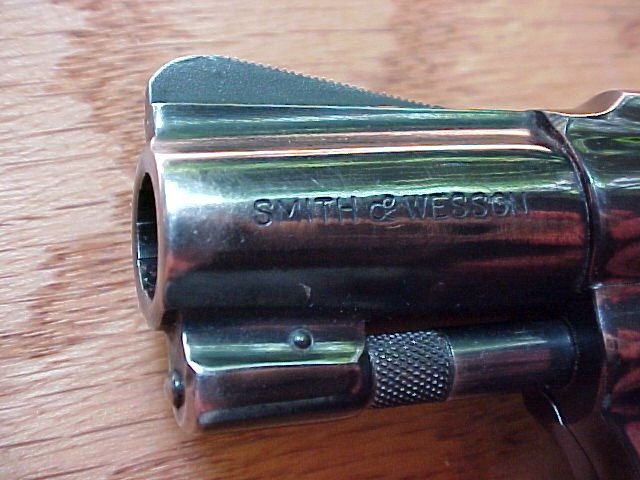
While we were talking, Jim broke out a revolver he was working on for a customer. He was installing an XS Tritium shotgun bead in a dovetail he had milled into the barrel of a J frame revolver. Click to enlargeHe had widened the notch in the rear of the top strap to accommodate it in the sight picture. The set-up was sweet. He had serrated the top of the barrel to reduce glare. Jim informed me the modification was still experimental, but he expected it to work well.

I just happened to have my Smith & Wesson Model 649 out in the car. Several years ago, I had seen a pair of 44 magnum snubbies that Jim had melted and set up as a brace of bear protection for a friend who was traveling through the Yukon. I left my little 649 with Jim to be melted with a bead blast finish, and to receive a new front sight if the XS Tritium sight modification works out well. Another Clark gun coming up.........

FWIW, Jim also had a well worn but complete and original 1918 M1911 in his used gun case for $1000 even. If anyone is interested, give him a ring.....

Labels: ,

Tuesday, July 21, 2009

Ring ring Ring ring

Click to enlarge
I received a call from Renee at Clark Custom telling me my Commander is ready to be picked up.

Pick it up tomorrow, hit the range with Frieda on Thursday........

Labels: ,

Thursday, January 29, 2009

The Smith & Wesson Model 438

I am very happy to discover that Smith & Wesson has brought back the Bodyguard frame style in the Airweight Model 438. I had the opportunity to examine one hands on at the past gun show, Model 438 Click to enlargeand the +P rated pocket revolver seemed to be a good choice for the concealed carrier who is looking for a brand new pocket gun.

The Model 438 is the modern incarnation of my beloved Model 38. There are, of course differences that do not appeal to my old fogey sensibilities. The integrated locking mechanism is of course, one of the new features that I do not like. Beyond that, I was quick to note the MIM trigger and hammer, and the exposed nubbin of the hammer seemed to be smaller and less well finished than that of the Model 38. I also did not care for the rubber boot grip, but that is easily swapped out. If the revolver had come with the rubber grip that is on the Model 640, I would have no complaint. The matte black finish is a plus in my opinion.

It is my contention that the Smith & Wesson Bodyguard is one of the best pocket guns ever devised. As a revolver, it will not be thrown out of battery and refuse to fire when jammed into an attacker's ribs or under his chin. It is the ultimate "get the hell off me" gun.

I am fortunate to have a collection of five Bodyguards in several variations. In the Airweight variation, the J framed revolver barely weighs more than the five rounds it carries. Pictured left to right: Model 38, Model 49, Model 649, Model 49, Model 38, Click to enlargeOnce loaded, it can be stuffed into a pocket holster and carried in a front pants pocket all day and forgotten about. The hump on the back of the Bodyguard frame helps the gun stay put in the carrier's pocket.

Another often uncited advantage of the pocket revolver is that a citizen can have their strong hand on their concealed gun in a firing grip while assessing a potential threat. The gun remains concealed, and the element of surprise is maintained until de-escalation options are exhausted and the introduction of the weapon is deemed necessary.

The other benefits of a pocket revolver for a person new to firearms and concealed carry are many. A round is always chambered and ready when the gun is fully loaded. There is no safety to disengage when presenting the handgun. Pull the trigger, and it goes bang. Maintaining concealment is as simple as finding a pocket large enough to contain a holster that will obscure the shape.

It will need some dry firing to smooth out the trigger, but I am happy to see that Smith & Wesson is producing a modern version of the Model 38. I have long maintained that the S&W Model 38 is the ultimate pocket revolver. If a person wants a new Smith & Wesson, the Model 438 may well be the closet they can get. If I can find one used I might just add it to my Bodyguard collection.

Labels: , ,

Saturday, December 27, 2008

The New Agent versus The Defender

Two of the finest carry pistols yet designed, in my opinion are the Colt Defender and the Colt New Agent. That's a pretty bold statement. Before I receive hate mail, let me explain that I am ruling out revolvers, which are not pistols. Let me also say that I believe the 1911 pistol is the finest fighting pistol ever designed. Quick, accurate, powerful. In a world of competing designs, almost a hundred years later, it remains the gold standard for the disciplined shooter, not the good enough gun for the lowest denominator.

When Colt finally decided to produce a true concealed carry 1911, they went whole hog with the Defender. Colt's new product was so different from their previous 1911s that they bestowed a new series designation on it, the Series 90.

The Colt Series 90 pistol is a three inch bushingless 1911 style pistol with a lightweight aluminum frame. They are designed for carry and self defense, not target practice. The Series 90 pistols have the Series 80 firing pin safety, but that is the only similarity.

The Colt Defender is not a particularly flashy pistol. It bears a stainless steel slide and a big rubber Hogue wrap around grip. The sights evolved from upright three dots to low profile swept back units. It has a three hole trigger, and a beavertail grip safety that morphed over time along with the sights. The Defender uses the Officer's ACP magazine, allowing for seven plus one capacity.

Where other three inch 1911 style pistols failed, the Colt Defender quickly gained a reputation for being a pistol reliable straight out of the box. Many shooters who had shied away from the smallest 1911 pistols, indeed shooters who had stated that any 1911 beneath Commander length would likely need professional gunsmithing to run reliably, were shown that reliability could come in small packages from Hartford.

The basic Defender formula was a good one, and the little pistol that could became the best kept secret of the 1911osphere. Typical of Colt's modern advertisement campaign, the pistol received little fanfare, and next to no mention in the gun rags. Across the internet though, buyers were raving about Colt's new product. They were buying it in droves and trading out the Good Year grips for slim slabs of wood.

Thus when Colt decided to produce a similar Series 90 pistol, one even more dedicated to concealed carry and self defense, they had their ear to the ground. The Colt New Agent debuted at the 2008 Shot Show and suddenly shooters were debating point shooting versus sighted fire for self defense again. The New Agent was similar to the venerable Defender, but with a significant twist. Conventional sights were absent. The top of the slide was as slick as Charlie Brown's head. Rather than dovetailed sights, the New Agent received a sighting trench, often termed a "gutter sight" along the top of the slide. The slide of the New Agent was blued, and the aluminum frame was black anodized. Other small differences abounded. The slim wooden grips that shooters were screwing on their Defenders came from the factory on the New Agent. The front strap had serrations. The slide was lightened in the front with a profile similar to the Browning Hi Power. The New Agent thumb safety was a GI style unit with a nubbin of a tab. The grip safety was reminiscent of the upturned grip safety found on some Commanders.

The reception for the New Agent, while initially enthusiastic, became more sedate as shooters contemplated the sighting system. Some preferred the black pistol to the stainless, and wished Colt had simply produced a blued Defender. Others decided to put sights on their New Agent. Over the course of a year, I purchased both pistols.

My New Agent stayed basically the same as it came from the factory. Click to enlargeMy Defender underwent some changes. Most notable was the addition of slim wooden grips, and the modification of the grip safety to achieve the spartan profile of an early Commander grip safety. I installed a Nowlin Speed Demon hammer on the Defender to complement the austere grip safety. Both pistols received trigger jobs and solid triggers.

Both pistols retained the polymer mainspring housings. While I routinely swap out the Colt polymer mainspring housing for steel, adding a heavier part just did not make sense on a pistol designed to be lightweight. The polymer housings are durable, and light. I kept them.

At the range, each pistol was stone cold reliable, and sufficiently accurate for self defense. Each pistol carried so easily in an OWB holster on a good gun belt that I forgot it was there. The real difference was in the sighting system.

Today, I decided to take both my Colt Defender and my Colt New Agent to the range and shoot them side by side. They have become remarkably similar pistols with the exception of the sights. I alternated between the pistols with each magazine, to prevent fatigue from creating the illusion one pistol was outperforming the other. At ten yards, I shot fifty rounds through each pistol into two targets, side by side, on the same frame.

Point shooting would have given similar results, so I used the sighting systems on each pistol. Click to enlargeI shot by raising the pistol from low ready to the sights, squeezing off two or three shots of sighted fire, and back to low ready. After a magazine in one pistol, I moved to the other. I did not "warm up" with another pistol, and I made certain I shot when I was hungry and full of coffee, allowing hypoglycemia and caffeine to simulate an adrenaline dump.

The results were interesting. The New Agent target is on the left. It has rounds concentrated in the lower left, usually indicative of anticipating recoil. The Defender target on the right had considerably more rounds in the ten ring, but the flyers indicate I was breaking my wrist either up or down. While it wasn't my best day at the range, it is undeniable that every shot would have been center of mass. Either pistol would be a worthy sidearm in an armed confrontation. At the end of the day, when the pistols are put to their intended use, I think whether the buyer wants a blued or stainless pistol may be more important than what is on top of the slide.

Labels: , , , ,

Tuesday, November 11, 2008

The Colt Defender

When I first saw the Colt Defender, I wanted one. The early versions wore the upright classic Colt sights, and I was rather dubious regarding the reliability of a three inch aluminum framed 1911. I decided to wait a while and research the pistol.

Over the past couple of years, I finally made up my mind. I would have one. Click to enlargeThe rear sight had been changed to a low profile type sight. The front sight was dovetailed. Those were the good aspects. The pistol also came with fat Hogue "Good Year" wrap around grips and a duckbill grip safety. Those were definite turn offs for me.

The clincher though was the reports of fantastic reliability. The bushingless Defender was raved about by it's owners. It quickly sold off the shelves new, and I never saw one used. Those factors told me that Colt had a winner.

I almost purchased a Colt Defender in January 2008. Instead, I discovered the Colt New Agent, and I was intrigued by the gutter sighted dedicated carry gun. I decided to buy the New Agent instead. It already had slim wood grips, and it was black. I instantly fell in love with the way the lightweight Colt carried. The positive carry attributes of the New Agent confirmed that a Defender would be my next pistol.

I knew where a Colt Defender waited, and on a trip to visit a friend, I stopped on the way to purchase it. Click to enlargeThe pistol wasn't exactly what I wanted at first, but with the addition of some slim wooden grips, a Nowlin "Speed Demon" hammer, and a grip safety modified to match an early Commander grip safety, it has come damned close. I would still like a dark gun for concealed carry, but the stainless steel and aluminum components of the Colt Defender will certainly survive the hot humid Southern carry environment better than carbon steel. A seven round Wilson Combat Officer's Model magazine fits both the Defender and the New Agent. This magazine increases the capacity to eight rounds, including the one in the chamber.

At the range, the pistol is 100% reliable. From the start, I have had no failures using Federal HydraShoks, Speer Gold Dots, and 230 grain hardball. The pistol seemed to shoot a little low, but I am uncertain if that is attributable to myself or the pistol at this time. Recoil is greater than that of a Government Model, but the benefit of a light, compact pistol helps insure that the carrier straps it on their belt every day.

A used Colt Defender

Update: My Colt Defender now has over a thousand rounds down the pipe, from 230 hardball to JHP. It has been unfailingly reliable. Click to enlarge

Accuracy has been adequate. This pistol is a carry gun, a defensive weapon, not a precision target gun. With it's short sight radius, if it scores all hits in the black, quickly at 15 yards, I am satisfied. It does, and I am.

Either due to cold or vibration, I lost one of the screws holding the cocobolo slim grips on. I installed the remaining screws and the replacement with a bit of gasket sealant to prevent them from backing out while shooting. The attenuated grip safety and Speed Demon hammer work together like a charm. I installed a Cylinder & Slide solid trigger.

The little Colt, shown here in a suede lined Ross pancake holster, carries so lightly, it is easy to forget it is on your hip until needed. The entire package makes for a weapon that is virtually invisible underneath a light jacket or sweatshirt. If a person is looking for a lightweight, concealable 1911, I have no reservations on recommending the Colt Defender.

Labels: ,

Tuesday, September 23, 2008

My Colt Compact

One of my favorite 1911 style pistols is a Colt M1991A1 Compact that I modified for carry. As an unmodified pistol it had an uncanny accuracy despite it's short sight radius. Click to enlargeAll the work I performed on it was done to enhance the shootability, reliability and durability of an already accurate firearm.

The Colt Compact is the bare bones parkerized version of the Colt Officer's ACP. As with most of the 1911s that I have modified for my own use, I installed an Ed Brown grip safety and an Ed Brown tactical thumb safety. I kept the Colt hammer, sear and disconnect. The trigger, though, was swapped out for a Dlask magnesium and titanium unit. I fitted a Ted Yost retro rear sight into the slide and had a dentist friend fill the original front sight recess with a bit of gold. The Colt slide stop and the barrel that held the pistol's accuracy were retained.

But wait...... There is one modification I forgot to mention, the one most people are interested in. The Colt Compact and Officer's ACP both suffer from a reputation of a recoil plug that depends on a small lug that fits in the dustcover for retention. Click to enlargeThe barrel bushing is a thin unit, and through the rigors of prolong use, the lug on the recoil plug has been known to shear off. When that occurs, the plug and recoil spring are launched down range, and the gun becomes an amusing club. I wasn't going to have that on a carry gun.

To rectify the problem, I ordered a reverse recoil plug from Clark Custom for $20. This plug has a lug that fits in the original recess, but more importantly, it has a flange that goes around it's rear that prevents it from ever breaking. The Clark reverse plug is a solidly over-engineered chunk of steel, and only a glimpse makes even the most skeptical shooter realize it isn't going anywhere. It uses the original recoil springs and guide, and requires minimal fitting to the pistol.

With the big chunk of Clark steel up front, the thin Colt Compact bushing was looking pretty anemic. I started to shop around, and finally decided on an EGW Melt bushing to replace it. Click to enlargeFor $22.50, the EGW Melt bushing is another hefty piece of steel. It is designed to extend to the edges of the slide to prevent a seamless blend on the muzzle of the pistol if it is radically dehorned, or "melted." along with the EGW bushing, I ordered the bushing wrench necessary to turn it. The bushing required fitting to both the slide and the barrel, but the specs were so close that I was able to achieve a close tolerance fit with emery cloth and a bit of oil and elbow grease. The bushing extends out past the barrel's crown a bit, effectively protecting it. Between the Clark reverse plug and the EGW bushing, the pistol has all the reliability of a ball peen hammer,

I gave the pistol a subtle dehorning, and I took my new carry pistol to a pro for refinishing. I wanted a tough finish, but also one that was dark and nondescript. I chose a teflon coating with a black slide over an olive drab receiver. Finally, Pearce rubber double diamond grips and a Wilson Combat magazine with a low profile base pad rounded out the package for a durable, reliable and accurate carry gun.

Labels: , , ,

Wednesday, May 21, 2008

My CCW Gun Requirements

People sometimes inquire as to my criteria for a CCW gun. Here are my requirements, in order of precedence.Click to enlarge These are only my requirements. You do not have to follow suit.

1. Reliability
2. Portability and/or Concealability
3. Speed of deployment
4. Stopping power
5. Accuracy and/or Shootability
6. Durability
7. Capacity
8. Ease of maintenance and availability of parts

Reliability: If a gun fails to function, in a crisis situation, then I find myself taking a poor choice of action if I draw it. Unfortunately, I find out after the course of action is chosen. The failure of a gun combined with the decision to use it equates to my potential death. This is because the gun should not be drawn from concealment in defense of one's life unless one's life is in jeopardy. If one's life is in jeopardy and the life saver fails to function, one's life is lost. Unless one's killer is frightened by a gun that jams or goes click........

Portability/Concealability: The old saw that it is better to have a mousegun in your pocket than a cannon back home is true. If you do not have your gun when you need it, it is as useless to you as the nitroglycerin tablets on your bedside table if you have a heart attack at the corner Burger King. If you can not easily carry and conceal your weapon, you cannot reliably follow the laws you agreed to when you obtained your CCW, and you will sooner or later fail to strap it on to keep with you all day.

Speed of deployment: The person who fires the first shot usually survives. Others are reacting to his actions. Greater speed into that first shot gives one the split second needed to make it an accurate shot. Firing the first accurate shot increases your survival rate immeasurably. Speed of deployment can be compromised by methods of carry as well as the gun's platform. Other platforms and carry modes enhance speed of deployment.

Stopping power: I want the first shot to have the ability to stop the attack if correctly placed. I want it to have the greatest potential to stop the attack if I fail to strike an incapacitating area. If a hit is so far off the mark that it fails to stop or repel the attack, I want it to slow the attack so the next shot can be placed more accurately. Fewer shots mean more ammunition conserved in case of unknown numbers of attackers. Believe me, when you are attacked, once you deal with the initial attack, the first thought in your mind will be the curiosity of where his accomplices are. Fewer shots also mean less likelihood of "overkill" claims in civil court at a later date.

Accuracy and/or Shootability: Self defense with a gun and target shooting are not the same. When a person's life hangs in the balance and their attacker is engaged in trying to kill them, they do not have time to make certain the front sight has an equal amount of light on each side with a 6:00 hold. They just need to get some lead into the son of a bitch as quickly as possible.

Durability: There is a good chance that the shots you fire in self defense will be fired after you have been knocked to the ground from behind, slammed up against the wall, and had your pistol struck against something. Even your draw while trying to evade your attacker may result in your pistol hitting something solid. You may drop it. Nobody plans to drop their gun in a life or death situation, but when the rush of adrenaline numbs fine motor skills and tunnels one's vision, plenty of people do. If the gun design will not function after being dropped on concrete, it fails the #1 criteria, reliability. Further, a carry gun leads a tough life in a holster getting smacked on door jambs, floors of public restrooms, etc. Click to enlargeIf it's not up to the task, it can't do the job. I don't like cars I have to work on all the time either. Tools that break suck.

Capacity: Having sufficient ammunition to stop an attempt on your life is the key. Capacity is important. Accuracy is vital. If you can't hit squat, a 50 round magazine will not help you. Survival in a gunfight depends a lot on skill and tactics, but a major player in the outcome is luck. That is something that Jim Cirillo taught, and it can't be ignored. Capacity can help you hedge your bets if your luck goes sour.

Ease of maintenance and availability of parts: I don't have time or inclination to be coddling a tool that should be performing it's job protecting my ass. If I can't wear a gun all day, clean it once a week, or as needed after a gully washer drenching, I'll find one that will allow me to do so. If something breaks on one of my carry guns, I want the part yesterday. I do not want my safety compromised because some dude in Yonkers figured cheap part would be good enough. I do not want my safety compromised because I do not have my gun.

People sometimes wonder why I chose the old single action 1911 or a snubnose revolver for self protection. This is why. They may not be glamorous guns, but they fit my criteria. Our lives may hang in the balance of our decisions at any given time. We may be attacked suddenly, without warning. If that occurs, to survive, we need to stop the attack. Quickly. Effectively. Efficiently.

Labels: , ,

Monday, February 04, 2008

Lightweights

Click to enlarge
I realized today that my last three 1911 purchases have been lightweights. I now own a lightweight 1911 in each basic size. Each one is made by a different manufacturer.

I carry them all though, and they are nice to tote.
From the top:
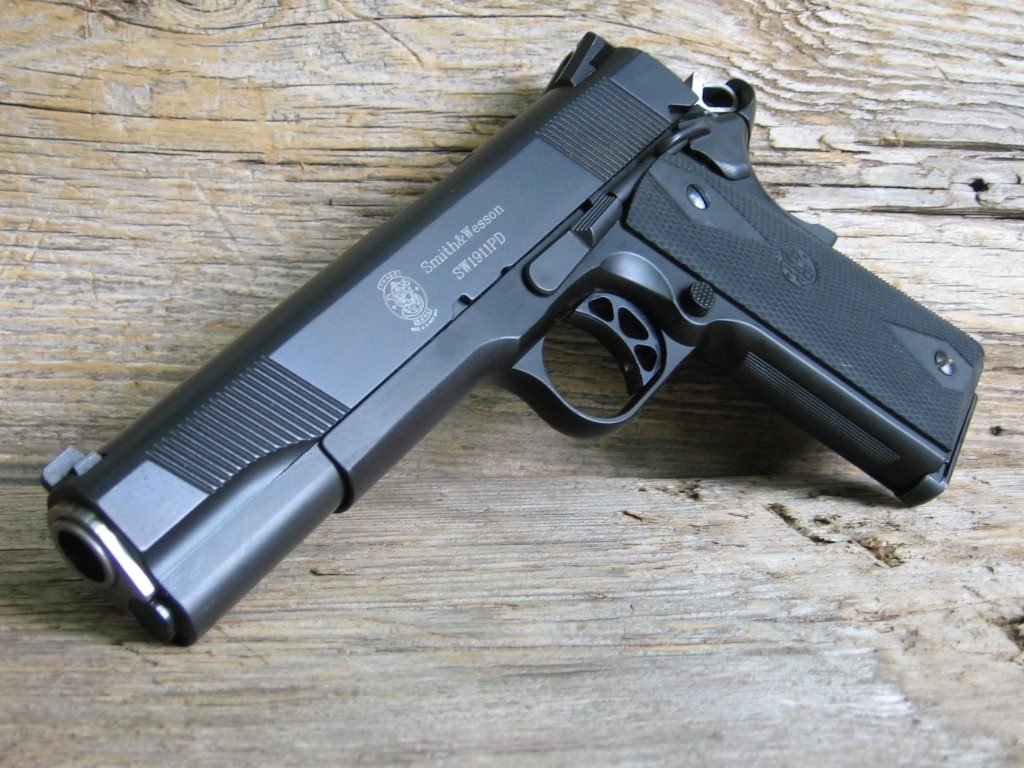
Smith & Wesson 1911PD
Kimber Pro Carry
Colt New Agent

Weird.........

Labels: ,

Sunday, January 27, 2008

Colt New Agent: Range Report

In the Summer of 2007, Colt released a pistol to little fanfare. It was a pistol designed to take Kimber's Ultra RCP and smack it down to the CCW mat. For a while, I had secretly lusted over Kimber's dedicated concealed carry pistol, but I never could get past the Series II thing. Now, I didn't have to.

It took me several days to decide to purchase Colt's dedicated carry gun, even after I had found a nicely priced example at a gun show. Click to enlargeWhen I finally realized the price was the same as a used Lightweight Commander, I broke down and purchased my first new gun in several years.

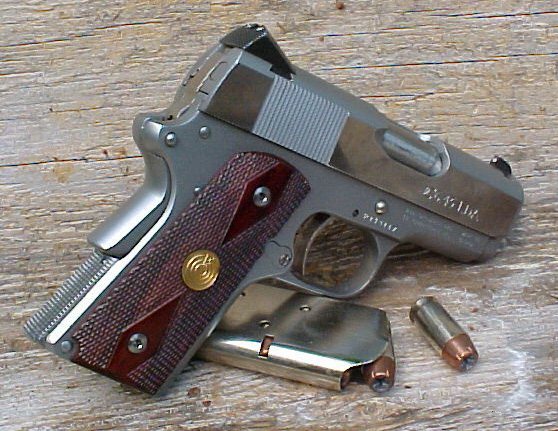
The Colt New Agent is an Officer's ACP sized pistol with an aluminum alloy frame. The barrel length is three inches, and it carries 7+1 rounds of 45ACP. The pistol has a blued slide atop an anodized frame. The black color is all business. The grips are slim grips, with a double diamond pattern that is pressed rather than sharply cut. The thumb safety is the same little nub as was present on the M1911. The mainspring housing is plastic and the frontstrap is serrated. The New Agent is a Series 90 pistol, incorporating Colt's patented firing pin safety. It comes with two magazines.

What makes the pistol unique in Colt's line-up is the sights. The New Agent lacks conventional sights, relying on a 2mm channel cut along the top of the slide. The idea behind the "gutter sight" is a snag free, quick to acquire sighting system. The trough is not meant for accuracy so much as it is meant for speed.
Click to enlarge
Once I had my New Agent home, I cleaned and properly lubricated it. Then I spent some time dry firing and trying to get used to the sighting system. The trigger was crisp and about four pounds. There was no creep, and no overtravel screw to adjust. For a defensive weapon, the lack of that trigger overtravel screw is a blessing.

I gathered up some ammunition, stuffed my Colt Compact in my holster, and took the New Agent to the range. I planned to shoot a variety of hardball, along with some Gold Dots and HydraShoks. I brought my Colt Compact along for comparison.

I started off with my usual drill, making certain the light weight Colt, even though new, was safe to fire. After a few single shots, I progressed up to a full magazine. then I tried to make the pistol jam. I limp wristed it. I fired it sideways, upside down. I let my thumb ride the slide. The New Agent was boringly reliable. The modified Colt Compact had a definite edge on shooting comfort though. The Ed Brown grip safety, the polished frame, and the additional weight all combined to make the Colt Compact a relative pleasure to shoot and the New Agent a handful by comparison.

In addition, the Teflon coated Colt Compact was quicker out of the holster. I was using a hand made IWB holster similar to a Summer Special. Click to enlargeI swapped over to a Don Hume JIT, and I experienced the same results. Perhaps as the New Agent is used a while, it will rival the Compact in ease of presentation. Time will tell.

The Colt Compact also ate the New Agent's lunch on accuracy, not surprising since it has sights. The New Agent did not come to sights for me quicker than the Compact. If anything, the sighted pistol had the edge in speed. Perhaps that was due to my unfamiliarity with the gutter sight, but those were my results. On the Colt Compact I have a Ted Yost retro rear sight paired with the stock Colt front sight. I had a dentist friend press some gold filling stuff in the recess of the Compact's front sight. The result is an accurate pistol with quick sights. Plus, I'm used to it. The lack of contrast in the gutter sight was detrimental. Perhaps I will paint the channel red white.

I continued to blast lead down range with the New Colt. The pistol seemed to be grouping low and to the left for me. I wondered what could be causing that, and then I noticed my finger placement on the trigger. I was over reaching the trigger, and shoving the muzzle over with the trigger stroke. Once I corrected my finger placement, the gun got in the black. I wondered, though, why that had happened. Then I realized.....Click to enlargeThe slim grips had changed the profile of the gun, as well as my grip on it. The screws and bushings were too short to try alternatives. I adjusted my grip, and the problem evaporated.

The New Agent had shot 300 rounds without a failure, so I loaded the magazine with HydraShoks, charged the chamber, locked the hammer, and put the pistol in my holster. My jacket draped over it, concealing it completely. I loaded my gear back in my range bag and went on about my day. I thought about going back to the gun show, but I had shopping and chores to do. I went to Wal-Mart and the hardware store, and then I continued about my business at home. I forgot the New Agent was on my hip. In the Don Hume JIT, on a good gun belt at 4:00, it carried that well. No, the unprotected thumb safety did not disengage. It is my hope that the pistol will slick up some coming out of the holster. I also hope that highlighting the gutter sight with paint will have a positive effect. If so, the Colt New Agent will be a welcome addition to my choices for carry.

Update
Click to enlargeThe New Agent passed my carry gun qualification test......500 rounds with no failures, 100 of which are carry ammunition, and it has earned a place on my hip. It carries like a dream. In a OWB holster supported by a gun belt from The Belt Man, I forget the pistol is even there. It is still chilly out, and I frequently use a sweatshirt as a cover garment. The pistol carries just as well underneath a sportscoat. These are my two preferred modes of carry.

When it warms up, I may swap back to my old Model 38 slid inside a Uncle Mikes #3 and stuffed into the front pocket of my khakis. For now though, having 6+1 rounds of 45ACP on tap if needed gives me an extra pocket, and I can't tell the difference in the effort it takes to pack it.

More on the Colt New Agent

New Agent recoil springs from Wolff

Labels: , , , ,

Friday, January 04, 2008

Kimber Pro Carry: Range Report

Every person that owns a recently manufactured 1911 style pistol owes Kimber a debt of gratitude. That may seem a strange statement coming from a fellow who eschews Yonkers for Hartford, but it is true. Kimber almost singlehandedly revitalized old slabsides during the wondernine revolution of the 1990s. With the introduction of the Kimber Custom in 1996, 1911 aficionados could finally purchase the pistol they had previously paid their gunsmiths to build for them. Nice triggers, match grade accuracy, decent sights, and a beavertail grip safety was standard as was the extended thumb safety. Kimber quickly rose to the forefront of the 1911 scene, and they held that position firmly until they decided in 2001 to place a firing pin safety and an external extractor on their re-vamped pistols. Until that time, Colt, and other 1911 manufacturers were put on notice. If they did not supply what shooters wanted, the shooters could go elsewhere for less money and effort. As a result, Springfield, and even Colt began to listen to their customer's wishes.

When I found a Series One Kimber that was designed for carry, in a pawn shop at a good price, I found it irresistible. There were things about the pistol that I did not like, but the addition of night sights coupled with very little apparent use made it a deal to me. I purchased the pistol and took it home for a going through. Click to enlargeI was not surprised to find the pistol devoid of lubricant. Many people barely lubricate their firearms. There were metal injection molded (MIM) parts in the pistol. Some folks are concerned about MIM parts, but today, they are a fact of life in a production gun. I cleaned and lubricated the Kimber Pro Carry, and I tuned up the trigger. Even though the plastic mainspring housing is a functional non-issue, I swapped it out for an aluminum one from Smith & Wesson. I reinstalled the original slide stop, as the previous owner had stuck an extended one on the gun. I screwed on some cocobolo grips, smacked in a Wilson 47D magazine, and I was off to the range.

45 caliber slugs exit the Pro Carry's four inch bushingless barrel. A captured recoil assembly controls the forged steel slide. The Kimber Pro Carry has a steel slide and an aluminum frame. Lightweight Kimber frames are machined from solid blocks of 7075-T7 aluminum, supposedly the hardest and strongest available. Click to enlargeLightweight Kimbers have been factory tested for up to 20,000 rounds without showing any appreciable wear. After shooting and toting my scandium framed SW1911, I was ready for another lightweight carry gun.

I loaded two rounds in a magazine to start off with. Then I ran a full magazine through the pistol. I shot a magazine sideways, upside down, I let the pistol flip around. I blasted off two magazines as fast as I could. It never failed to feed and function. Recoil would best be described as snappy. The lightweight frame of the SW1911PD made it a breeze to shoot. The lightweight frame of the Commander sized Pro Carry made it a bit tougher to manage. The pistol was not uncontrollable, but you knew the pistol you were shooting was not a Government Model. The trigger was crisp with no creep, and very little take-up. Pull was about four pounds.

I put some index cards out at 10 and 15 yards, and swapped the grips back to rubber. With aimed fire, I found the Pro carry shot a little low for me, although it was consistent. It grouped well. By compensating for elevation, I could nail what I wanted.Click to enlarge I have to wonder if the Tru Glo sights atop its slide were meant for the longer Government Model.

As I continued to pound lead out of the handgun, the BreakFree and Tetra grease I had lubricated it with began to seep out of the pin holes and slide rails. That is good. I just wipe it off and keep shooting. All in all, at this range trip, I shot 270 rounds of Winchester White Box, Fiocchi, Federal HydraShoks, and a trusted friend's reloads. The pistol consumed it all with methodical glee, never failing to go bang. The trigger never changed. It stayed sweet and consistent from the first shot to the last.

It was easy for me, a Colt kind of guy, to see why so many people like Kimber firearms. The Pro Carry was accurate, and reliable. It was a fine pistol that came in the box ready to do its job as a carry gun. After another 250 trouble free rounds, it will have earned its place in my carry gun rotation.

Syd's Thoughts on the Kimber Pro Carry

Labels: , , ,

Sunday, May 27, 2007

A Tale of Two Bodyguards

When I titled this article a Tale of Two Bodyguards, I actually ignored two Bodyguards in my possession. I own a Smith & Wesson Model 49, Model 649, and now, two S&W Airweight Model 38's. This article is about the Airweights. The Smith & Wesson Model 38 is a superb carry gun. In my opinion, it is one of the best defensive carry guns, period.

My first Model 38 was a Michigan police supply gun, easily recognizable by the blued frame and stainless cylinder. It is not a pretty gun, it is entirely functional, with a custom grip given to me by a retired State Trooper. It has ridden in my pants pocket for several years.

There is a decided advantage to a J-frame in a pants pocket. You can have your hand on your weapon, in a firing grip, before your adversary even knows it is there. The snubby revolver will fire time and again with the muzzle pressed into a rib cage. If a fight goes to the ground (as most end up doing) this little lightweight power house is the gun to have.

The Model 38 has an aluminum frame, making it substantially lighter than it's steel framed brethren, the Model 49 and 649. The humpback configuration of the Bodyguard frame assists the revolver in staying positioned in a front pants pocket. The exposed nubbin of the hammer allows a single action shot if desired, while the concealed hammer prevents snagging on the draw.

Thus, when I found a pristine nickel Model 38 in a pawn shop, I jumped on it immediately. For $225, it was a steal. Along with the nickel finish, it has a smooth trigger face. Five years ago, there was a line drawn between pinned and unpinned revolvers among collectors. This revolver does not have a pinned barrel. Now, though it seems the dividing line is drawn between Smith & Wesson revolvers with and without locks. This revolver is a lock free dedicated carry gun. That it is a Model 38 is just gravy on the cake.

Labels: , ,

Wednesday, April 18, 2007

SW1911PD Range Report

A new lightweight 1911 was inevitable when Smith & Wesson began making their version of "old slabsides". In 2004, S&W first introduced the scandium alloy framed SW1911Sc. It weighed an overall 28-ounces, as opposed to the near 40-ounce weight of a standard Government Model. The pistol was an instant hit for a carry gun, and has proven to be durable and reliable. In 2006, Smith & Wesson showed they listened well to their customer base when they released the SW1911PD. The SW1911PD was essentially the same pistol, blacked out, with more discreet markings on the slide. Click to enlargeWhen I found a used SW1911PD for sale at a good price, I quickly snapped it up.

Like the SW1911s before it, The SW1911PD has a serrated frontstrap, Novak sights, and a grip safety activated firing pin safety. The small parts are made of MIM, and the mainspring housing is checkered aluminum. From the factory, the pistol has a solid full length guide rod, and forward slide serrations, both of which I can live without. The external extractor on the SW1911 is not what John Moses Browning designed, (or rather, what the US Army requested), but Smith & Wesson had a lot of experience with external extractors on their double action auto loaders. Where external extractors fail on other 1911s, the S&W unit has a reputation for keeping on ticking.

To bring the pistol closer to my idea of a carry gun, I installed rubber S&W grips, a GI recoil set-up, and did a trigger job on it. Astute readers may notice a marking gone. With a Wilson magazine stuffed inside, I was ready to take the pistol to the range for reliability testing. Click to enlargeI brought along 250 rounds of Winchester White Box 230 grain target ammo, as well as 50 rounds of Federal 230 grain HydraShoks. I also took a standard SW1911 to compare the scandium framed pistol to.

I had read how the scandium 1911s were more difficult to shoot, due to their lighter weight. I prepared myself for that, but I refuse to wear shooting gloves. Over the past three years, I had not read a single complaint regarding the frame being weak. That is a good thing, because I like to train with what I carry. If a pistol cannot stand up to the pounding I will give it in training, I really don't want to stake my life on it.

I started shooting with the SW1911PD, first, just making certain it was safe after my gunsmithing efforts, and then trying to make it jam. I limp wristed it. I shot it sideways. I rode my thumb on the slide. I shot it upside down. Not once did it fail to feed and shoot. The safeties functioned positively as advertised.

I shot all 300 rounds through the SW1911PD. It was a blast to shoot. It had a quick, certain return to sights, allowing for rapid recovery and follow-up shots. Click to enlargeI found absolutely no difference in muzzle flip than what I am used to in a Government Model. Perhaps this is because I use a very strong isometric grip in a Chapman stance for my shooting. With my grip, the weight of the frame is simply not a factor in recoil.

I was, frankly, having a blast. Two shooters with Glocks were off to my right, and I was eating them up at 30 feet. I was punching holes in an index card taped to the chest of a silhouette target. There was a single ragged hole in that card. I was flying high. The SW1911PD was accurate. If I slowed down, it was a precision shooter. Then, I had a problem........I was out of ammo.

Damn. I went to the counter, and I bought another 100 rounds of 230 grain MagTech ammo. I decided I had better switch to the standard framed SW1911 immediately. I noted that the perceived recoil and muzzle flip was the same in my hands. Click to enlargeI shot about 25 rounds through the standard SW1911 and I realized something else. The SW1911PD was actually easier for me to shoot! I could hold it up, with less effort, for a longer period of time. No wonder I had unknowingly blazed through my ammunition. My arms simply were not getting tired from holding the extra weight extended at arms length!

I only have 375 rounds through this pistol thus far, but it is showing great potential as a carry gun. I have little doubt that the reduced weight on my belt will result in less fatigue at the end of the day. I would have absolutely no hesitation about recommending this pistol to a woman as a carry gun, assuming she is familiar with the 1911 platform, and uses an isometric grip. I look forward to passing the 1000 round mark and putting the pistol into service as a carry piece.


Then, I wondered how it would compare to my Colt Compact.

Update: The first internet report on a SW1911PD frame cracking that I have come upon is here.

Labels: , , ,

Monday, January 15, 2007

Carry Gun Reliability

Marko at The Munchkin Wrangler has a great article up on the 1911 as a carry gun, and on carry guns in general. While I don't have $1500 to plunk down on a NIB semi-custom 1911 that is mass produced with the latest tactical whizbangs, I would be mad as hell if I spent that kind of coin on a gun that couldn't get through a box of ammo without choking.

As long as 1911 packers continue to accept the unacceptable in a carry gun just so they can tote the lastest in tacticality, they will be sneered at by Glock men. The reason is clear. Glocks work, and they work well. They may not be as pretty, they may not be as accurate, they may not be a lot of things the 1911 is, but they work. When a Glock punches holes all day long while a 1911 chokes on it's own gun powder residue with the the 1911 owner making excuses rather than demanding results, the result is clear as day. Glock just whooped that high dollar 1911's butt.

It's time for 1911 owners to stop accepting guns that choke, and for gun writers to stop promoting guns that fail. The 1911 can be an excellent carry gun, fast, powerful, beautiful and reliable. It has to be understood, however, that the most important quality in a defensive weapon is reliability. This is no laughing matter. When guns fail, people often die as a result.

A reliable 1911 can purchased for well under $1500. A reliable 1911 can be built for under $1500 as well. I'm not talking reliability through five boxes of ammo either. I'm talking the same level of reliability that is the Glock's reputation. Drag it through the mud, clean it with a squirt of brake cleaner once a year and never have it fail reliability. With any ammo. You will not, however, get that kind of reliability by making excuses for a gun that chokes. And about the mags and ammo thing Tam, if you load crap ammo into Chinese magazines made out of melted down milk jugs and stuff it in the bottom of your Glock, I'll guarandamntee you the Glock will fail too. Any auto loader depends on top quality ammo and magazines to function. No slam on Tam, I love the gal. She knows what I'm talking about. She knows what she's talking about too.

If you have $1500 and want a 1911 for a carry gun, contact Yost~Bonitz, Clark Custom, Novaks, or another premier gunsmitty. Tell them what you want. They can meet your needs. If you don't have that kind of dough, or if you don't want to invest that money in a gun that will be punished by the rigors of carry, then do what I did. Build your own, or keep the damned thing stock if it functions 100%. Do not accept a chrome sissy pistol that fails over a Glock. Demand a better gun.

Big hat tip to Marko!

Labels: , , , ,

Monday, May 22, 2006

A Custom Colt Carry Gun

This Colt Compact was a standard black parkerized pistol when I purchased it at a gun show last year. It was in like new condition, and the $400 asking price did not faze me. Since that purchase, this little 1911 underwent a slow but deliberate transformation by my hand. It was already a very accurate little shooter, so I kept the Colt barrel. The trigger was immediately swapped out for a Dlask unit, and a proper trigger job was performed. I installed a plain Ed Brown grip safety and extended thumb safety. The original plastic polymer mainspring housing was traded off for an Ed Brown checkered chunk of steel. A Ted Yost retro rear sight was used. The recess in the original Colt front sight was filled with gold.

The big change was made with the addition of a EGW melt bushing along with a Clark Custom reverse recoil plug. The thin stock bushing is known to crack on Colt Compacts, and the tab retaining the recoil plug has been known to shear off, sending the recoil assembly downrange in a embarrassing display of design inadequacy. The EGW bushing and Clark reverse plug make certain that that will never occur on this pistol. The EGW bushing also protects the barrel crown. Once I had the mechanics of this pistol where I wanted them, I dehorned it, screwed on Pearce double diamond rubber grips, and had a two tone teflon finish applied.

I still prefer my Government sized Sistema as a carry gun, but the Compact is a reliable alternative, and a nice option to have when needed.

Labels: , , ,

Wednesday, April 19, 2006

Show Your Carry Gun

A couple of months back, there was a thread on one of the forums that challenged members to just unholster their present carry gun, snap a photo and post it. The results were revealing. Here are a couple of my pics.
Carry guns lead a tough life getting banged and bumped where other guns never do. Many people try to hide the hard earned scars of their guns. That's a shame. Thus, I am starting a visual meme. That's right, participate now, curse me later!

I challenge my readers who have their own blog and a camera to unholster their carry gun right now, snap a photo, and post it, linking to this page. Show the world that a gun does not have to be perfect to be beautiful! Don't make me have to tag you!

FWIW, this beauty is a Smith & Wesson Model 38.

Labels: ,

Sunday, March 12, 2006

The Paraordnance C6.45LDA

The 1911 is handgun design that endures as the standard by which combat handguns are judged today, almost 100 years after it's inception. Only the uninitiated would argue that point. Yet, personal protection for a private citizen is grossly different from personal protection in a combat zone. The very thing that makes the 1911 the epitome of combat handguns, the cocked & locked single action deployment, can become a enough of a liability in civilian use to give even the most hardheaded defense attorney a headache. While, to my knowlege, there has not been a criminal conviction on the grounds of cocked & locked carry, some cases have come perilously close, in stating that the cocking of a DA revolver not only implied malice of forethought, but made the gun a more "efficient killing machine". Whether one agrees or disagrees, these are the legal seas a person must navigate after a lethal encounter, whether justified or not.

Through the years the basic 1911 platform has not been altered much. Sure, more effective sights were installed, more resistant finishes were applied, more comfortable controls were fashioned, but the pistol itself functioned the same as always. Paraordnance has been a consistent provider of 1911s that possess an inovative approach to needs for the 1911 shooter. Paraordnance appeared with a 13 round 1911 frame and magazine in 1988, and in 1990, became a major player in the 1911 arena by making the entire high capacity 1911 pistol itself. Suddenly, the 1911 was a competitor in the wondernine era again.

Then in 2001, Paraordnance overturned the 1911 applecart. Seeing that CCW was a sweeping trend across the United States, Paraordnance decided to tap into that market. The 1911 platform has always been an excellent one for concealed carry. No handgun carries flatter on the hip, and gets into a fight quicker. The problem of the potential legal entanglements afterwards always remained, however, not to mention many potential pistol packers simply get the willies thinking about cocked & locked carry. Rather than deny these limitations, Paraordnance resolved to attack them head on.
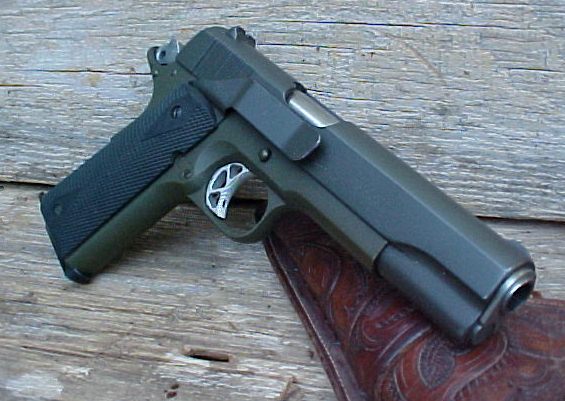
What resulted is possibly the best concealed carry gun yet designed. The C6.45 LDA (Para Carry) has what Paraordnance calls their Light Double Action Trigger. It is a DAO action, but with a trigger unlike any other. The LDA system uses two hammers. When the slide is racked, the outer hammer carries the inner hammer with it, and cocks it. The outer hammer then follows the slide forward and rests just off the firing pin. The pivoting trigger works by way of a drawbar to then pull the outer hammer back under very light resistance. Once the outer hammer is again fully to the rear, increased resistance (approximately 6.5 pounds) is felt without creep just before the sear releases the inner hammer, firing the weapon. This allows the same trigger pull for each shot, as well as giving the ability to stage the hammer in use. The trigger really has to be used to be appreciated. The only drawback to the action would be in the event of a misfire. If a misfire were to occur, a tap, rack bang response would get the pistol back into action.
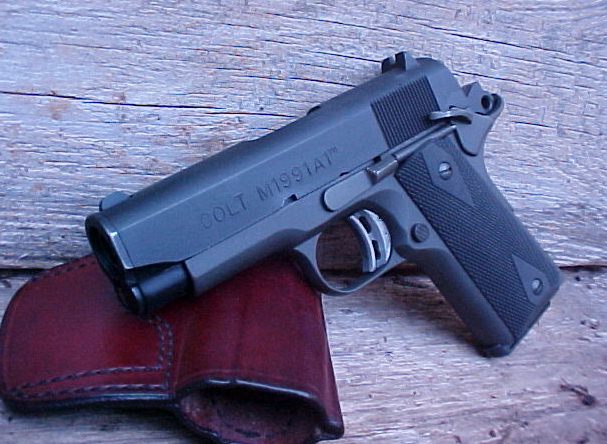
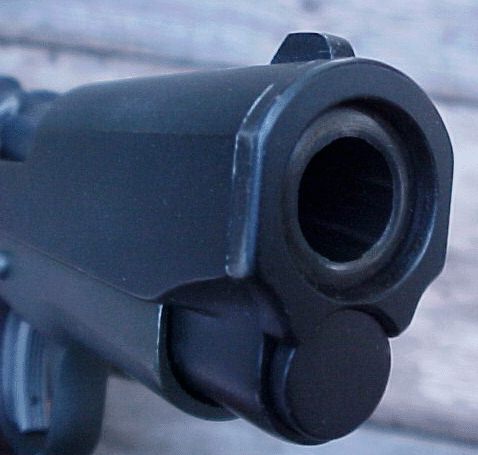
The Para C6.45LDA has three safeties. The firing pin safety uses an inertia firing pin and a spring loaded plunger, which keeps the firing pin from going forward until activated by the trigger's drawbar. The thumb safety can only be activated when the internal cocking cam, and the slide, are fully forward. When the thumb safety is pushed up and engages the slide lock notch, the slide is prevented from moving rearward and the drawbar is disengaged, preventing the hammer from moving rearward even if the trigger is squeezed. In use, it functions exactly like a standard 1911 thumb safety. The grip safety prevents the rearward travel of the trigger and the slide unless the pistol is gripped firmly with the shooting hand depressing the grip safety. While the function of the LDA grip safety is similar to that on a standard 1911, it accomplishes the same task by blocking the hammer with the grip safety lever instead of by the trigger bow as in a standard 1911.

The C6.45LDA was designed from the ground up as a concealed carry weapon. Because the external hammer does not allow for manual cocking, it is shaved off to little more than a sliver. Since the shaved external hammer cannot bite the shooter's hand, the pistol does not require a beavertail. What results is a rear profile on the weapon that eliminates any snagging on the draw. While a spur hammer and beavertail may not present a problem with a holster on the hip, limitations are discovered when one tries to draw such a weapon from deep cover. The pistol comes with low profile three dot sights that are serrated and ramped on the rear, again preventing snagging on the draw. The gun is small. It is a similar size to any other micro 1911 on the market. The grips are very nice cocobolo, and are about as thin as could be cut and still maintain structural integrity. Unfortunately, the screw placement is unique to the pistol, making replacement grips a difficult proposition. The C6.45LDA uses a proprietory recoil system of two captured springs on a full length guide rod. The C6.45LDA does not use a barrel bushing. Lock-up is accomplished by two locking lugs on the top of the barrel, and a standard bull barrel arrangement. The barrel is fully ramped with a concave crown. The trigger is rounded and polished smooth.

I obtained my Para C6.45LDA as a prize in a Pistol League competition. I likely would not have bought it myself. Afterall, 1911s that are shorter than Commander length have a reputation for problems. I wasn't sure I would like the LDA trigger, and how accurate could a four inch sight radius be? Still, it was a pretty interesting 1911, and as a freebie, I gladly accepted it.

After a good cleaning, lubing and familiarity check, I took it to the range with a bucket of 230 grain hardball. My first shots amazed me. At 15 feet, this pistol was a one hole shooter. I ran the targets out to 25 feet. My slow fired groups stayed under two inches. I noted that the recoil was greater than a Government model, but not uncontrollable. Quick follow up shots would be possible with a strong controlled grip of the weapon. My pinkie finger rested below the magazine, lessening my grip. I borrowed some skateboard tape and applied a strip to the plastic mainspring housing. Viola! I could maintain weapon control. After 400 rounds of hardball, I had no failures, but my hands were needing a rest.

Later that week, I showed up at the range again with the Para to try out some hollow point ammo. I shot Federal HydraShoks, PMC Starfire, and Winchester SXT, all in 230 grains. All fed without problems. All were accurate, shooting consistent groups under two inches. This pistol was looking like a definite keeper to me by this time. Once home, I went to the Smith & Alexander website looking for a checkered MSH for the pistol. I found none, but on calling S&A, I was told that a P12 MSH should fit, and if it did not I could return it for a full refund. I placed my order. There is something about a plastic MSH that bothers me. A plastic MSH with skateboard tape on it is even more unappealing. A few days later, the stainless steel MSH arrived from S&A. It fit the pistol, but extended past the rear corner of the frame more than I liked. It also had some very sharp checkering. I broke out the files and went to work. A short time later, my pistol had a metal MSH that would stay locked to my palm.

I continued to train with the pistol using 230 grain hardball, and after 1000 rounds I noted that the thumb safety barely contacted the slide on recoil, and had peened it under the serations. I filed down the upper corner of the thumb safety to keep it clear. Also around round 1200 I began to have some issues with the pistol jamming. The extractor and ejector looked fine. On examination of the barrel/frame fit, I saw that the sharp edges of the barrel ramp were cutting into the frame, raising a small burr on the frame and slowing the barrel on recoil. I took out my jeweler's files and Dremel and gently radiused the edges of the barrel ramp and smoothed up the inside of the frame. The problems disappeared. It was around this time that I replaced the recoil assembly. Paraordnance recommends replacement of the entire recoil assembly every 1500 rounds or so. They sent me my first replacement pro gratis. I remain convinced, however, that the jamming problems were caused by the barrel ramp edges biting into the frame of the pistol.

After putting over 2000 rounds downrange with this pistol, it became my primary CCW pistol for a year nor so. I learned that a full capacity Wilson Combat magazine will lock into the pistol and feed without any problems. Thus, eventhough the C6.45LDA came with a spare magazine, I carried it with a 6 round magazine and Wilson magazines as spares. I figured if I had to pop in a second magazine, I will probably need the extra ammo in the Wilson. I carried the pistol in a couple of ways. If I had the luxury of a covering garment, I liked a Don Hume JIT. The Colt Commander sized holster fits this pistol like it was made for it. If I did not have the luxury of a covering garment, I prefered a SmartCarry holster. The C6.45LDA carried very nicely, with no gouging or painful reminders a gun is there.

There are only a few things I would have liked to see different. I believe the pistol should have come with night sights. I would also have liked to see it come with standard grip screw spacing and a standard recoil system. Paraordnance has resolved these issues already, with the C7.45LDA, Companion Carry pistol. These improvments come at the cost of a slightly larger pistol though. As a result, we take our choices. This Paraordnance mini-cannon met my needs as a carry gun. It was small and comfortable enough to stay concealed all day long in hot weather. It had the takedown power and accuracy to remove a threat with a minimum of shots fired. After a bit of work it became solidly reliable. It effectively adressed the issues many have about carrying a 1911 in the civilian world. It did all this while remaining a stock pistol. Because of the jamming problems I had, I cannot whole heartedly recommend the C6.45LDA, but I was confident enough in my particular example to stake my life and freedom on it.

The astute reader will note that the last paragraphs are written in past tense. I quit carrying this pistol. Why would a man stop carrying what he felt was the best CCW pistol designed? I began to hear rumors then see photos of Paraordnance mini-pistol's slides cracking. Whether the cracking occured because the recoil assembly was not being changed regularly, because of hot ammo, or other abuse did not matter to me. I train with the gun I carry. I train hard with the gun I carry. If the pistol cannot stand up to the pressure and round counts of my training, it's not up to the job of riding on my hip. Regrettably, I retired the Para C6.45LDA after I saw several cracked slide pictures. My own pistol has not shown any signs of cracking, but I know it will be worthless if it does. Perhaps, at some point, I will trade it off. Time will tell. The ParaCarry C6.45LDA was a fantastic idea, brilliantly designed, but apparently poorly manufactured. That is a shame.

Labels: , ,